Saturday, January 23, 2010

Selfishness and Selflessness

There are two opposing views of moral philosophy and they are mutually exclusive. On the one hand, morality is self serving. This is known as objective egoism as put forward by novelist, Ayn Rand. The other system of morality serves others. It is altruistic as in Christian charity. Each system has benefits and liabilities.

OBJECTIVE EGOISM
Ayn Rand's philosophy of enlightened self interests suggests that the right thing to do is that which benefits the self. There is nothing in nature that conditionally guarantees the survival and well being of an individual. To promote one's own being, one has to serve one's own interests. No one is required to feed you, clothe you, shelter you. Your subsistence rests on your shoulders alone. In that respect, actions that do not promote the self are not morally right. They cause more harm than good.

This is a difficult concept for most to wrap their heads around. We are taught from a very young age to share our toys, to put the needs of others before our own. Rand would say that this is ultimately detrimental to society. If we continually give of ourselves to help others, we will eventually have nothing for ourselves. On the other hand, if everyone reasonably serves their own interests, then each has their needs fulfilled. The stress is on reason. One's best interests must be rationally determined. The individual need not serve every whim. Rand denies the equation of the objective egoist with the selfish brute. Most view selfishness with the bloody tooth and claw of some Nietzschean superman, treading over the bones of his enemies in order to claim his prize.

Satisfying every whim is irrational and in the long run will not further one's goals. In fact, that which will better serve the advancement of the ego is pushed aside. Hard work, creativity, ingenuity - these things are shoved aside for no other purpose than to sate one's appetite. Rand would regard this as shallow. It is acceptable to satisfy the appetites, but not at the expense of one's best interest. Drug addiction, alcoholism, womanizing in the end will do more harm than good.

On sharing and charity, objective egoism turns a critical eye. Giving to charity does not serve the self. Moreover, it insults the receiver of charity. As the moral principle is self serving, to serve someone else's interests is to deny them the independence of their actions, which damages the self esteem. Charity breeds pity and resentment. Sharing breeds resentment as well. A possession shared loses it's value the more people share their enjoyment of it. In the Fountainhead, Gail Wynand purchases a statue that he keeps in a private museum. It exists only for his enjoyment. This same statue of a nude woman was once viewed by the ignorant masses with disgust. In Wynand's possession, the statue maintains its artistic integrity. If beauty is in the eye of the beholder, then it is as beautiful as Gail says it is. This suggests that all art should be privatized. The Mona Lisa, beloved by nearly everyone, is actually worthless as is anything meant for public consumption.

Objective egoism is a hard philosophy to follow. The serving of one's own interest above all just goes against the grain. It pits the individual against society by putting the individual above society. Followers either commit suicide, end up in therapy, or abuse or misunderstand the moral principles. It is a philosophy for perfect men. As there are no perfect men it is designed to fail. It arms the selfish with an excuse to be selfish. Furthermore, objective egoism requires one not to believe in god. Belief in the existence of God presupposes the belief in the gospel. If one believes in God, he either follows God's laws or disobeys God. By behaving selfishly, he defies God's laws. The irony is how Christian conservatives cling to Rand's philosophy. This demonstrates just how far Christians have strayed from Christ's original teachings.

Ayn Rand was of Russian descent. She understood all too well the dangers of socialist thought. That society could take the property of an individual and distribute it willy nilly across the population was something she held in great contempt. As such, she developed her capitalist system of man worship to firmly plant the individual above society.
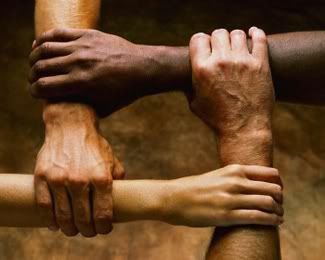
ALTRUISM
Christian charity, as well as socialism, suggests that the moral principle stems from the serving of others before the self. Sacrifice is crucial to both systems. In Christianity, Jesus gave up his life to take on the sins of man (depending on how you view the crucifixion). In socialist Russia, men gave up their property, their desires for some utopian future. While Jesus had at least the benefit of being glorified and worshipped, Russians had to work long hours, stand in lines for toilet paper, and suffer under the iron hand of an oppressive government.

Even so, there is something appealing about doing things to benefit others. Whether it is donating to charity, helping an old woman across the street, digging a neighbors car out of the snow, or just holding the door open for someone carrying bags - helping is satisfying on a deep level. But is it right? Is Rand correct in that we deny others their independence. Do we pity them or cause resentment. Well, if the help is not wanted, certainly. On the other hand, there are those moments wherein one is grateful to receive help.

Why do we help others? Is it for this sense of satisfaction? Is it to stroke our conscience? As Nietzsche wrote, if we train our conscience well it will kiss us as it bites. Perhaps we help others out of a greater sense of community. I help those in distress that one day, when I am distressed, others may help me. However, this in not a truly selfless act. Even being charitable because God ordains it is not selfless. To do good in order to get to heaven suggests an ulterior motive, making the act selfish. Can one truly be altruistic?

Selflessness cannot be a total conviction. If one feeds other before feeding oneself, then one starves in the end. Complete selflessness is unattainable. One can only help when possible. Also, is one obligated to assist the misfortunate? It is one thing to donate your time and money in a time of need. The drought in Ethiopia or the recent earthquake in Haiti marks a period of need, where people give from the goodness of their hearts. However these are widely publicized events. People are starving all of the time all round the world. Are they any less worthy of help? Are we obligated to help everyone less fortunate than ourselves? If so, then the quality of life for everyone must be equal. This is the goal of socialism, to bring the quality of living of every individual to exactly the same level. The doctor is on par with the village idiot. There is no distinction made based on personal merit, not on skill, not on contribution to society. Society is served before the individual.

Altruism appears just as impossible a system to follow. Giving the shirt off your back, though noble in intention, just leaves one naked. In a system where each supports the other, one should in turn offer his shirt to you. But is it noble to accept this gift? Is it not demeaning? You can not put others before yourself every waking moment. Doing so only taxes your strength and your resources, rendering you no help to anyone, especially yourself.

A BALANCED PERSPECTIVE
To escape the traps present in either system, one must serve oneself and others. It is worthwhile for one to pursue his own interests as long as they do no great harm to others. Jesus said not to bury your talents in the dirt. Even that pinnacle of self sacrifice suggested that one should not abandon one's aspirations. Treat yourself. Advance your knowledge. Improve your mind, body, and spirit. Just don't do so at the expense of others. If you can, lend a helping hand. Preferably perform good deeds in secret. The unseen hand leads to less resentment.

Eastern philosophy treads this balance just as carefully. The Buddhist or Daoist shuns material gain. However, this is not that others may take more of the share, it is more that the ego attaches itself to material possessions. One is more concerned about things than their Buddha nature. Importance given to things creates stress, namely jealousy, greed, and suspicion. In Daoism it is much the same. Concern over possessions saps the vital energy, weakening the spirit. The spirit weakened, the body weakens as well, eventually leading to diseases of stress such as hypertension, cancer, and insomnia. The point is that supposed selflessness may have roots in selfish behavior. Meanwhile selfish behavior may have roots in selflessness. A classmate may struggle with a quiz. He asks you for the answers. You could tell him, but what does this achieve? He learns nothing. He passes the test. You don't tell him and this is viewed as selfish, a way to improve the bell curve to your favor. In actuality, you refused for a less selfish reason. If the student fails the test, perhaps he will study harder for the next one.

Luckily most people live in between the two extremes. They serve their own interests, yet help others when necessary. I think it naive to expect one to live solely by one moral philosophy or the other. People are complex. Life is complex. One's moral philosophy, then, should be more adaptable. Tend yourself that you can better tend others. Tend others that you may better tend yourself.

Sunday, January 17, 2010

Vectors, Arcs, and Spirals

With such a title you may expect me to discuss subatomic particles. Maybe one day after I replace my brain. No, this post details the concepts of linear, circular, and spiral within the martial arts. One may categorize attacks and defenses within these parameters.

LINEAR
As you would imagine, a linear attack or defense travels in a straight line. As the shortest distance between two points is a straight line, martial arts that prefer offense and speed lean to linear applications. An attack comes on like the firing of a cannon. Apply force directly at the enemy. Attacks include thrusting kicks, front kicks, side kicks, back kicks, diagonal kicks, straight punches, lunge punches, cross punches, and the like. The diagonal kick bring the leg up and then extends the foot from the knee in a straight line. This kick is common to karate. One can kick with the same leg multiple times without bringing down the knee. Tae kwon do students often do this very thing. The cross represents a linear punch, one that extends diagonally from the shoulder. A left hand cross, then, travels to the right in a fairly straight line. A cross is an effective punch to the head.

A linear defense meets an opponent's attack directly. In kung fu, this is known as the broken fangs technique. The concept is to meet incoming force with greater outgoing force, fighting fire with fire. In the purist sense, one can punch an incoming fist, kick and incoming leg, or head butt and incoming forehead. In such a match up, the stronger force wins. Whoever has the hardest fist, leg, or forehead delivers greater damage. The downside is that contact still is made, and the defender suffers damage however minimal. Those versed in broken fangs know how to use the hardest, sharpest points of their anatomy to deflect blows. The knees and elbows are primary defensive weapons in this case.

CIRCULAR
Proponent's of circular techniques do not dispute the case that the shortest distance is a straight line. However, they suggest that linear attacks may not offer the best course of action. In circular attacks, force is delivered in arcs. Instead of a cannonball, the attack is more like a wheel. A wheel rotates from the center. Furthermore, the outside surface of the wheel travels faster than the hub. By rotation at the waist, one can transfer considerable force into the limbs for an attack. Circular offenses include circle kicks, crescent kicks, wheel kicks, lotus kicks, roundhouse kicks, spinning kicks, back hand strikes, elbow strikes, hammer fists, sword hand strikes, and the like. The lotus kick of kung fu may be an outside kick (begins from outside the frame of the body and travels inward) or an inside kick (begins inside the frame of the body and travels outward). A blow from a circle kick may have enough arcing force to knock an opponent down. The roundhouse punch follows an arc from outside the body towards the opponent. The benefit of a roundhouse punch is that it may disappear within the opponent's blind spot and subsequently catch him in the temple or ear.

Circular defenses form the basis of many self defense styles, even those with linear attacks, such as karate. In this instance, an arc of force is used to deflect an attack. The circular parry of karate is designed to block any attack to the head or torso. As one hand moves in an upward blocking arc, the other hand follows a downward arc. The circle serves as a useful defense in that the defender may move in the direction of an attack, thus negating it's force. This is a central concept in Judo and Jujutsu.

Arcs of force influence throws as well.

SPIRAL
Spiral attacks are an extension of the circular. The primary difference resides in body mechanics. Rotation comes not just from the waist, but the entire body. It takes the form of a whip. In the case of the whip, the attack unfurls, coiling out until striking with the furthermost extension, typically some striking point of the hand. The energy stored within the coiled arm releases on impact. The hidden hand punch of taijiquan starts from the foot, spirals up through the ankle and knee, into the hip and waist, up through the shoulder and elbow, and into the wrist and fist. At each point of articulation, the spiral energy increases. Finally, this energy is transfered in a drilling blow to the opponent. The hidden hand punch demonstrates the spiral energy moving outward. Energy can also spiral inward.

In aikido, opponents brought into the circle are neutralized. The aikidoist seizes the punch and pulls the attacker inward in a spiraling arc. This arc first follows, then controls, then leads the attacking force, drawing it down into a throw or an immobilizing hold.

Even the most linear martial arts retain some circular elements. Each has its uses in attacking or defending. As with all martial arts, the success of an application depends more on the Martial Artist's understanding and skill that on the kind of technique used.

Sunday, January 10, 2010

Paradoxes of Time

So, the wife has me watching Doctor Who. This is not an altogether bad thing. I have enjoyed David Tennant's portrayal of the Time Lord and despite the much maligned writing style of Russel T. Davies, have enjoyed many of the episodes as well. Granted I am not a Who fan per se, just a casual viewer. As such, I am not as invested in the Doctor and therefore less prone to attacks of fandom good or bad.

The adventures of the last of the Time Lords brings up several ideas about the nature of time. I won't go into great detail on the Doctor's treatment of time as I haven't the sufficient background as a fan to do so. Just the same, he will get the occasional mention. So, here is a brief overview of various time paradoxes.

THE GRANDFATHER PARADOX
This one blows my mind. Take into consideration that you are a traveler through time. Back several decades you encounter a woman. You develop a relationship, fall in love, possibly marry, and beget a child. That child grows older, marries, begets a child. That child grows older, becomes a traveler in time and meets the same woman you did.

In other words, you meet your grandmother and with her beget your father. You become your own grandfather. The rub of this paradox is that to be you qua you, that is to be as you have always been you would have had to meet your grandmother before ever being born. The very fact that you were born verifies the fact that you had already gone back in time. If you had not travelled through time, you would have never been born.

Mind blown.

The grandfather paradox was first introduced by fiction writer, Rene Barjavel, in his novel, The Imprudent Traveller. However, in his novel the time traveller kills his grandfather, thus negating the chance he will ever be born. The aspect of becoming one's own grandfather was addressed in an episode of Futurama.

The grandfather paradox appears to be inescapable and theoretically could lead to the destruction of the universe. However, if the traveller kills his grandfather and therefore is never born, then he could never go back in time to kill his grandfather, thus ensuring that he is born. The circle is viscious. Back to the Future confronts the issue of the traveller compromising his own existence. Marty McFly interferes with the meeting between his mother and father. To restore the timeline, he must get his mother and father to fall in love.

TIME LOCKED EVENTS
The nature of time tat Doctor Who seems to keep to is that of Nabikov's Self-Consistency Principle. In this sense time travel is possible provided the time traveller will not drastically alter the timeline. In other words, what happens in the time line is destined to happen. The time traveller may have certain room to move within the timeline provided key events that are "time locked" are not affected. In Waters of Mars, the Doctor comes to the first Mars colony. He realizes everyone there is destined to die. Having grown tired of so much loss, he attempts to save the colony. In the end, the leader of the colony knowing that she was destined to die, takes her own life. When the Doctor went to Pompeii, he instigated events that led up to the eruption of Vesuvius. As the eruption of Pompeii is an historical event, this suggests it has always been so and the Doctor's actions were permissible.

The problem with destiny is that it undermines freedom of choice. If events are destined to take place, then the efforts of man are pointless. What is meant to occur will occur nonetheless despite all efforts to the contrary.

ALTERNATE TIMELINES
Alternate timelines and parallel universes are favored by science-fiction and comic books. This allows the time traveller full reign over the timeline with little consequences. Any change to the timeline creates an alternate reality. Events taking place at and after the change splinter from the true timeline, that is, the time line from which the traveller originated. What If? comic book scenarios and various Star Trek episodes explore this aspect of time travel. The new Star Trek movie addresses this issue in depth, developing a time line far removed from that of the original series.

Other series such as Red Dwarf have fun with this concept, taking into account that there is a different timeline for each choice made by each individual. This suggests a near infinite amount of parallel universes. Rimmer meets his alternate self, who happens to be brave, charming, handsome, and confident. This extreme departure from Rimmer's jealousy, awkwardness, and self hatred stems from one event. In one timeline Rimmer is held back a year in school. As such, he applies himself, becoming a more upstanding person in the long run. The Jet Li vehicle, The One, suggests a more limited number of alternate timelines. Were one to kill off all the alternate versions of oneself, one would gain their power. This culminates in a showdown between two alternate selves with the equal amount of power absorbed from the destroyed selves.

The problem with alternate timelines is that they lack credibility. As they veer from the original time line, what happens seems to matter less and less as whatever the traveller does has no repercussions in his own time line. This may be why I didn't care much for the new Star Trek movie. That and I seem to be allergic to JJ Abrams.

THE BUTTERFLY EFFECT
The grandfather paradox is but example of the butterfly effect. The butterfly effect is a concept introduced in chaos theory that suggests, metaphorically, that the beating of a butterfly's wings in one part of the word can build over time to a hurricane on the other side of the globe. In short, any simple alteration to the timeline will incur drastic effects over time. A misspoken word, delayed travel, a moved object may instigate a series of misadventures leading up to a completely altered timeline.

The classic example is the tale of time traveller tourists observes dinosaurs. As long as they remain on the established path, the timeline is ensured. However, in trying to take a photo, one tourists steps off the path and crushes an insect. In returning to the present, he finds the alphabet and spoken language to have altered drastically. The events between are unclear, even illogical, suggesting that there is a fragile bond between all things that we not completely understand. Chaos theory suggests that events follow mathematical patterns. However, when a change occurs in the pattern, that change is compounded over time ultimately developing into a different result.

Left Turn in the Doctor Who series explores this aspect of time. Donna Noble is prevented from turning right, thus determining that she never meets the Doctor. As their paths never cross, events from that moment forward also take a different turn leading to the possible extinction of the human race. Only in returning to the moment of diversion can the original timeline be restored.

A Halloween Simpsons episode played with this concept, displaying different results for each different event that takes place back in time. Results varied from raining doughnuts to serpent tongued people.

RUBBER BAND EFFECT - TEMPORAL MODIFICATION NEGATION
If time can be viewed as a flowing river, then it's course can be diverted, blocked, slowed, or quickened, but the flow remains. Eventually the river will claim its original course. So, too, with time. At least that is what this theory suggests.

What ever alteration is made to the timeline is restored over time. The time traveller can do whatever in the past, even killing his own grandfather. However, when returned to his present timeline he will find that the actions he had taken have been negated as though he had never gone back in time. It is like pressing your palm down on a foal rubber mattress. At first it makes and impression. Eventually, though, the impression is restored to the point where no trace of a handprint remains.

Again there appears to be no repercussions, rendering this theory meaningless in a literary sense. What aims at nothing achieves nothing.

RESTRICTED TIMELINES
In a restricted timelines, any attempt to alter the timeline will either fail or ironically contribute to the historical effect. Let us say you go back in time to assassinate Adolf Hitler. As you take aim with your period rifle and fire, another assassin steps in the path of the bullet. You kill the would be assassin, in turn saving Hitler's life.

This fatalist attitude towards time travel makes for a good story. In HG Well's The Time Machine, our hero attempts to save the life of his lover. However, each attempt only leads to her demise in some other fashion. Murdered, drowned, struck by a cart. Similarly, in The Crow television series, Eric is given the opportunity to go back in time. He attempts to prevent the murder of his love only to find her dying by some other means. Having to continually witness the death of your love would become a living hell. Eventually one must accept the event and move on.

This basically is a more limited version of the time locked scenario.

AFTERTHOUGHT
So that is a brief sampling of various time paradoxes. A few more words on time is Nietsche's theory of eternal recurrence. Time is a spiral, like a coil or spring. Though it moves forward, it circles above past events. It follows the same valleys and peaks of decades past. In this sense, certain periods of war and peace repeat. Periods of wealth are followed by economic crashes. Classical art is followed by periods of romanticism.

In Eastern philosophy, time is regarded in less linear terms. Past, present, and future are regarded as coexisting side by side. Just as events in the present color the future, they also color the past. Look to how the discovery of Troy has changed how we look at the Iliad and the Odyssey. Events that have yet to take place, such as the birth of one's child, may influence who we are today. This more semiotic view of history is one of the major cultural gaps between the East and the West.

Thursday, December 24, 2009

Wu Wei: Doing without Doing

Wu wei is often translated as non-violence, which is not all that accurate. Better to say non-interference. It is a principle in Daoism of limited effort. Zen Buddhists call it skillful means. Athletes call it being in the zone. The central concept is to manage things successfully by doing as little as possible. Know when action is required and know when to keep your hands off. The perfect leader can rule a nation without seeming to do anything. The nation manages itself naturally. Of course, the ruler acts, but discretely and in the moment. He doesn't push things. To push is to meet with resistance.

In the martial arts, wu wei is regarded as suppleness, softness, yielding, or passivity. The Japanese word, Ju, embodies this concept. Judo and jujutsu as martial arts both use an attackers force against him. By yielding to an attack, you reduce the power of the attack and can then control and counter. This technique is used in taijiquan to great effect. The common technique is to yield first. Next is to deflect the attack, then control the attack, and finally to redirect the attack. If you look at the yin-yang diagram, you see an s curve in the center. This s curve is often used as a model for self defense. With the waist as axis, the taiji player yields to the attack, seizes the attacking arm, leads the attacker in the direction of the force, and then redirects the attack. This redirection is known as Cai, or pluck. The sudden redirection of force delivers a whiplash force that can break a neck or dislocate a joint. Note that not all steps may be necessary. A deflection, hold, or throw may not require redirection or even control.

Minimum effort is central to Daoism. Maintaining one's mental, physical, and spiritual health relies on not over extending oneself. This makes the typical Daoist appear lazy. Fair enough, but are they stressed? Are they over worked? Are they invasive? Are they a control freak? Daoists act, but only when necessary. When Daoists act, they do so in accordance with the Way. The Way is an unintelligent force that creates and sustains all things (sound familiar Star Wars fans?) It follows patterns of ebb and flow. Daoists, through meditation and other means, tune themselves into this pattern. As a philosophical Daoist, I attempt to attain this relationship with the Way. Sometimes I succeed.

One day some friends and I decided to hike up a trail behind the university. It was late winter and snow still blanketed the bench of the Wasatch Mountains. The trek up was tricky. I took many rests, not as keyed up about the destination as I was appreciative of the journey. This was no race for me. We eventually came to the desired spot. We larked about, then headed back. As you can imagine, the way back was a difficult journey. The ice and snow were a poor combination with the downward slope and gravity. Everything seemed to want you to go forward and down. For most of us, this meant falling on your ass. I, however, went with it. I understood the Way or Dao of the mountain. I slid, yes, but I did not resist. I let myself slide down the mountain on the soles of my shoes, racing down the mountain. I managed to keep my balance simply because I went where the mountain wanted me to go. Soon I was at the base of the foot hills. A large boulder sat gleaming in the sun, its peach colored stone warm and inviting. I climbed atop the boulder and sunned myself, waiting for my friends to return. All the while I maintained a feeling of contentment, relaxed awareness, and general goodwill. My friends were not quite so cheery. Several were downright surly after having taken several nasty spills.

As mentioned in the latest podcast, our friends Neil and Tanja are engaged. Both attribute their meeting and subsequent engagement to the InsideOutcast. I admit now, and will forever defend my position that I am not a match maker. I met Tanja on the Box Room forum. We hit it off as I know a little German and complimented her on her knowledge of English. Meanwhile, Brandi had developed a solid friendship with Neil over twitter. I knew from Tanja that she was into Doctor Who and audio books. I knew through Brandi that Neil produced, edited, wrote, etc. several Doctor Who audio plays. It didn't take a genius to figure out that what Tanja enjoyed, Neil produced, so I pointed her in his direction. This was just a small matter of getting Tanja the Doctor Who audio she wanted and Neil another customer.

Little did I know that they would develop a friendship on the web. That friendship flourished into something greater. At first this was, frankly, a little troubling as neither Brandi or I were certain that feelings were reciprocal. Neil, understandably, was quite laconic about the affair. Finally, on Christmas Eve, he announced his engagement. Truth be told I am not responsible for their love. They did that themselves. it grew from mutual respect and admiration. All I did was act when action was best. Minimum effort. Bring two people together with a single, non-interfering comment. I had no selfish intention, no hidden agenda. There was nothing I expected to gain from their meeting. I was an agent of the Way in a single, humble instant. The rest was their own doing.

I wish Tanja and Neil a life of continued happiness and shared moments of joy. Best wishes and congratulations. By the way, no matter how much you wish to thank me for introducing the two of you, it was only an introduction. The connection you two have made, you have made together. It is purely, essentially your own. I was just a small step in a long and glorious journey. Think of me as no more than a stepping stone on the path of your new life together.

An excerpt from the Dao De Jing, the Classic Book of Integrity

The soft overcomes the hard;
The formless penetrates the impenetrable;
Therefore I value taking no action.
Teaching without words,
Work without action,
Are understood by no one.

Teaching without words - have a while to perfect that one. ;)

Monday, December 21, 2009

Step Off: A Brief History of Dance


Scientific study suggests that we humans possess an understanding of rhythm that is lacking in the rest of the animal kingdom. Musicality in animals is accidental at best. In man it is deliberate and conscious. Rhythm forms the backbone of music. The first instrument is the human voice. One can imagine primitive man aping the sounds of nature, of grunting patterns that developed into speech and then song. The beat of the drum and plucking of string was soon to follow. Woodwinds, too. Music is inherently, definitively human. Where there is music there is likely dance. Dance has evolved over time. Yet, many dances retain a primitive quality. Here I present a brief history of dance.

RITUAL DANCE
Early dance was performed ceremonially. Nomadic tribes were deeply superstitious. Sympathetic magic implies that like produces like. If one were to dance out a successful hunt, surely the next hunt would prove successful. Dances of ceremony exist today in the form of many African tribal dances, Native American dances such as the well known rain dance, and even the measured movements of a Daosist priest or Shinto priestess.

FOLK DANCE
As superstition recedes in favor of logic, dances are performed more as tradition than ceremony. Dance is an expression of cultural heritage. Dancing around the may pole, Irish step dancing, Russian folk dancing - these are expressions of cultural significance. Many of these dances remain unchanged over the years.

SOCIAL DANCING
As tradition falls to the way side, dance is viewed as a means to bring couples together. Social dancing is one of the most common forms of dance, spanning a great many styles. Square dancing, country line dancing, latin dancing, ballroom, the Lindy hop, disco - each is a means to bring together prospective young lovers. Even the waltz is a social dance, though for the upper class. Military men were expected to know several dances and perform them at social gatherings whereby they could meet an eligible young woman. On the other hand, some social dances can get quite risque. The French can-can for instance was usually performed by ladies wearing no underpants. Men were sure to glimpse a little somethin' somethin'.

EXPRESSIVE DANCE
At some point, one goes dancing not in order to meet someone, but simply to let off some steam. Here one dances for oneself. Contemporary dance and street dancing are a fair example. In contemporary dance, the dancer expresses the meaning and mood of the song, the body a conduit for the music. Dance is from the heart and extends throughout the entire body. Though it may lack rhythm in many cases, it can quite beautiful. Street dancing is just as much an expression of music, but more urban. Hip-hop, breakdancing, and crumping embody life on the hard streets. Movement reflects this lifestyle. Distinctions between different styles of hip-hop can be drawn simply from where one lives.

DANCE AS ART/ENTERTAINMENT
On the flip side, there are those who enjoy watching expressive dance. Certain people may go to a club just to watch great dancing. At its finest, dance is high art. Ballet is one form of dance that the general public regards as high art. Just about any dance can be considered art. It depends on how much value is placed on that particular dance. Contemporary dance is finding its place as art. Even if dance is not regarded as art, it may be viewed as entertainment. From vaudeville to Broadway to movies to music videos, dance is used to draw and captivate an audience.

So there you have it, a brief history of dance. Note that many styles overlap. Hip-hop can be regarded as social, expressive, and entertaining. The distinction rests in the intent. Are you dancing with someone, for someone, or for yourself?

Monday, December 14, 2009

A Darker Shade of Pale: Ethnic Goths

People may ask, "Why is it I have never seen a goth of color?" In other words, why is it the goth scene so predominately white?

Well, they have a point. The goth scene started in England with the gothic dance pop music of Joy Division. Joy Division in its own right grew out of the punk music scene, a primarily white, Anglo-Saxon protestant movement. Other gothic bands soon followed. Bauhaus, The Cure, Siouxsie & the Banshees, The Sisters of Mercy, The Fields of the Nephilim. As a progression from punk, goth is rooted in British history, politics, culture, and religion. Yet, as a romantic movement, goth moves away from just the social and political arena of England to touch upon more universal issues of loss, sorrow, isolation, and death. There are many references to religion, particularly Christianity, that reflect a more specific society. In some degree this is balanced with Greek, Roman, Norse, and Celtic mythology. Even still, the above represents only the religions of Europe.

In defense of homogeny in the scene, not all goths can be judged by their cover. Many goths, I would even go as far as to say most goths, do not fall into the established stereotype. Black eyeliner, black nail polish, wild hair, clove cigarettes, torn fishnets, ruffles - these are the outward features of the typical goth. Most goths I know may wear black, maybe a band T-shirt, but they don't go out of their way to goth it up. I like to call us basement or subdued goths (sub goths for short). Sub goths don't look goth, but they are. Even DJs and musicians in the scene can be basement goths. So, who is to say that a black man, an hispanic woman, or an Asian fellow isn't a subdued goth? There is more to it than just appearances.

Goth is about expression and sensibility. It is not limited only to the vampire aesthetic. Goth is an ever widening circle embracing many aspects of the dark side of life. Romantic goths embrace the high fashion and social customs of the Victorian or even Elizabethan age, only with a prominent penchant for black, mourning attire. Intricate lace, ruffles, top hats, canes, parasols, veils - these are the finery of the romantic goth. Deathrockers resemble something akin to a punker just freshly risen from the grave. Emphasis is on anti-fashion and horror. Gothabillies embraces the 50s aesthetic of bowling shirts, tweed, leather jackets, poodle skirts, and Betty Page. There are many subcultures within the scene, each with something else to offer a prospective goth.

Furthermore, discussion of race is a sticky topic to begin with. Although there appear to be sharp distinctions regarding national borders and cultural differences, the walls are thinner than one may think. Anthropologically speaking, science can trace our DNA to Africa. In short, we are all African. Each human can trace their DNA back to Africa. We are brothers and sisters one and all. During the ice age, massive glaciers used up much of the ocean water. The seas receded. This allowed early humans to travel across dry land that may once have been a river, a lake bed, a canal. Humans moved up into the Indus valley and eventually settled in Eurpoe and Asia. Humans evolved over time to adapt to the colder climates. Melanin evolved out of the skin and eyes. Fast twitch muscles atrophied in favor for muscles equipped for more prolonged activity. This is not to say whites and Asians are more evolved. Africans evolved parallel to Eurasia, only equipped to handle warmer climates. Even then there are distinctions between East an West Africans and well as differences between mainland Asians and Asians on the Pacific islands. When someone describes a custom or trait as black or white, latino or Asian, this has as much to do with genetic make up as it does environment. There are distinctions between different races that developed over time, but the essence of humanity remains the same.

ASIAN GOTHS
There are several emerging goth scenes in Japan, particularly in Tokyo. Gothic Lolita is a scene in which girls and women dress like dolls. The clothing is very detailed, similar to romantic gothic fashion, very intricate with frills and lace, only with a touch of anime. This scene has grown in popularity and is spreading to Europe, the U.S. and elsewhere. The other big movement is the cybergoth scene. Cybergoth is a blend of rave culture and the goth scene. Cybergoth is largely populated by rivetheads. DJ Sisen is a world renown Industrial/EBM DJ. Not only does she expose Tokyo to Skinny Puppy and Nitzer Ebb, she is a fashion ikon in her own right. She dresses in visual kei, wearing quite outlandish and colorful outfits and applique to her eyelashes, etc. Japan's greatest contribution to the goth scene has to be the fashion. The trends and designs in the visual kei arena definitely take gothdom in a new direction, taking dark fashion into this next millennium.

Musically, the goth music of Japan tends to be J-rock with horror elements. Marilyn Manson is often cited as inspiration for the scene. A J-goth band worth mentioning is Chako, an ethereal band from Kobe. The music is lush and sorrowful.

Chinese culture is not one for diverse expression, being a socialist nation. However, many Chinese Americans and other Chinese living outside mainland China follow the way of the goth. Goth is quite rare in the rest of Asia as well, finding expression only when apart from the dominant culture. Asian Americans and Asian Europeans are more likely to demonstrate gothic tendencies or have gothic tastes. This may have something to do with the immediate environment. If .

LATIN GOTHS
Mexico has had a long love for the vampire and other stories of dark romance. South America, too, possesses an air of mystery and wonder. The Aztecs and the Mayans are just as mysterious as the Druids and Celts of Europe. So it is little wonder that members of the Latino community would adopt goth as a culture. There is an hispanic gothic community in the Bronx. It is a tight knit group that had been featured in the New York Times. Of course, the members of this circle of goths have suffered persecution from parents, neighbors, and the like. These goths run the gamut from trad-goth to rivetheads.

And speaking of rivetheads, Hocico is an industrial band from Mexico City. They took inspiration from Skinny Puppy and similar bands. Their style is acerbic, yet beautiful, ranging from aggrotech to endzeit electro. Endzeit is usually limited to Germany. Hocico performs mostly in Spanish. They are getting more recognition all the time and currently tour all over the world. A number of other hispanics populate gothdom in one form or another.

AFRO-GOTHS:
Goths of African descent, or afro-goths, are fairly rare. However, they are not unheard of. According to an Internet pole, 51% have met an African American goth or emo. However, most of the yes answers are from the midwest and the south, both having in sum understandably less insight into the gothic community, and therefore more likely to give an incorrect answer.

A problem, especially in the U.S., is that there is a great deal of pressure on black Americans to hold onto their cultural heritage. As they did not come to America willingly, it is understandable that many African Americans resist complete assimilation. As such, they keep to the culture of Africa in music and dress. The biggest contribution to the black American experience is the development of a new culture. Blues, doo-wop, hip-hop, rap, and funk (and many would say rock & roll) developed in America as a means of black American expression. However, more and more white America emulates black culture. Vanilla Ice, Kid Rock, eminem. These represent stages of reverse assimilation. White kids disassociate with their white roots. Eminem is more widely accepted today than Vanilla Ice nearly 20 years ago.

The mistake is assuming that black goths are trying to appear white. Goth is not a white issue. Goth is about self-expression. The black goth is attracted to the same things as a white goth or a hispanic goth. Truly gothic folk tales have a rich, African tradition. Perhaps the person grew up in a white, suburban neighborhood and therefore lived the "typical" goth experience. Whatever the case, something appeals to the individual and draws him or her into the scene.

Sadly, many blacks still possess a misconception of goths, believing them to be racist skinheads, devil worshippers, etc. Although these elements do appear in the scene, they are not the scene. Just as some blacks are gangstas doesn't mean all are. There are black CEOs, black authors, black producers, black bankers, black physicists. Even in the rap community not all rappers are gangstas. The Rza is deeply into Eastern philosophy. The fact is there is a fair amount of resentment towards any kind of alternative culture in the black community, just as in other communities. Goths, being so very obvious, make an easy target. It is the same attitude white people had when members of their community started to adopt the black culture. Wiggers became the derogatory term for these individuals, sometimes even if they grew up in the same socio-economic environment. The black goth can be viewed as a traitor to her race.

Just the same, some afro-goths do overcome this opposition and express themselves fully at the expense of ridicule or exile. There is a black gothic Lolita community, embracing the Japanese goth aesthetic. There are black goths within the vampire community. The Vampire Club in New York features several regulars. Romantigoths, candy goths, death rockers, even gothic belly dancers all find a place in this small community. A considerable section is taken up by rivetheads. Industrial/EBM may have teutonic beats, but the content is mostly about politics and urban decay. These subjects are the same posed by Public Enemy and other rap artists, only the music is ever so slightly different. Even the technology is the same, lifting hooks and beats from other sources. Laying in samples from television, movies, and radio. Industrial music reflects the anger and frustration of living in a post-industrial society. One of the top cybergoth communities is based in Detroit, a city with a large black population.

An unexpected drawback of the African goth is difficulty finding a suitable life partner. Sure they could go outside the black community, but why should they if they don't want to? A black goth seeking a black goth must be a nightmare and I do not envy them for it. However, I do wish them the best of luck. Several websites are devoted to bringing together members of the black gothic community to offer support, to enlighten, and to accept. Many afro-goths come to the party late and have to play catch up. This means many questions asked regarding fashion, slang, customs, and music. For any aspiring afro-goth, I would suggest getting on Last.fm and entering the following tags. Goth, Gothic Rock, Darkwave, Ethereal, Industrial, EBM, Horrorpunk. This should provide you the opportunity to choose those artists that best fit your tastes.

Black goth bands are considerably rare. Code Industry is our best example. They were a politically charged, coldwave group in the early 1990s. Blacks have contributed individually to the goth-industrial scene. Reggae vocalist, Morgan Adjei, lent his stylings to KMFDM's album UAIOE on tracks like Murder and Loving Can Be an Art. On Front Line Assembly's album, Millennium, Che the Minister of Defense provides rap vocals to Victim of a Criminal. Duane Buford provided keyboard and spoken word vocals on Revco's Linger Ficken' Good.

It is disappointing that so few black musicians actively contribute to the goth scene. There is definitely room for goth from a black perspective. I would be interested to see what direction black musicians would take darkwave music. The contribution of blacks to medical science, music, film, and sport is considerable. The joy of goth is adaptability. Goth can be shaped to the viewpoint of the musician. Christian, pagan, sadomasochistic, satanic, romantic - a number of approaches are open for the aspiring afro-goth. Hopefully, the fans today will grow into the musicians of the future.

Black musicians have contributed to the goth scene even though they are not goths. Michael Jackson's Thriller, speaking as a goth, is a brilliant tribute to the horror scene. The lyrics refer to just about every cheesy creature feature of the 50s. The video equally addresses zombies, werwolves, and such. It is just good fun. Prince's outlandish costumes granted blacks the ability to dress similarly. Dressed in period victorian ruffles, one's peers would regard one as a Prince fan and not a goth. This is a mixed blessing, surely. Musically, goth owes a great deal to black culture. Reggae inspired punk, and punk inspired goth. Blues music, too, influences a good deal of early goth. Meanwhile, hip-hop and rap have inspired the new sound of Skinny Puppy as well as the aggrotech vocal stylings of Angelspit and the peculiar mash-up that is Stromkern. Tribal beats form the foundation of many goth songs, particularly by artists like Tigerlily and Drumatic.

The gothic-industrial scene has gone global. Bands, fans, and DJs live in or can trace their heritage to the following countries: Afghanistan, Australia, Austria, Belgium, Canada, Denmark, England, Finland, France, Germany, Greece, Ireland, Italy, Japan, Lebanon, Mexico, Norway, the Philippines, Scotland, Slovenia, South Africa, Sweden, the United States of America, and Wales. And this is just off the top of my head.

Occasionally, white goths receive venom from the ethnic goth community. White goths are condemned for being too homogenized. Same fashion, same music, same background. This attack fails to consider the broad range of goths within the white community. It seems a feeble attempt to validate the ethnic goth movement by creating a straw man argument. White goths are all the same so they are boring and irrelevant. Ethnic goths are all different and therefore interesting and relevant. Every white goth, and every goth of color I know, is a unique individual. There is no place in the debate for such baseless attacks. Allow those to express themselves as they choose fit just as you would permit yourself the same. The same person who says that all white goths look the same turns around and in the next breath says that racism has no place in the goth scene. I am left scratching my head.

Sunday, December 6, 2009

On Forgetfulness

After our Thanksgiving hiatus, The InsideOutcast returned with our 17th episode. How much you forget in just two weeks. It doesn't take a careful listen to expose missing cues. The audio stings come out of nowhere. Both the news and feedback suddenly interrupt conversation. This shows just how much you can forget over a short period.

Recently I injured my knee tripping over uneven pavement. As such, I haven't been performing my usual routines of taijiquan. There was a time I performed each routine daily. As of late I've found the time to perform maybe one or two segments of a full routine. It is not surprising that I am forgetting some of the postures, particularly during the single sword routine. Going from Flying Diagonally to Black Dragon Sways Tail has been a source of trouble. Until recently I found myself turned around.

In the same vein, returning to the office after a vacation or special assignment, one may find that he has forgotten many of the standard operating procedures. Passwords and phone numbers are forgotten. Much of the once familiar routine seems foreign and awkward.

The mind is a complex organ. Over the years, people have equated the brain with the greatest device of the time. An abacus, a pump, a steam engine, a calculator, a computer. The computer is quite an apt description. The mind is much like a hard drive. It stores information. Some of this can be accessed readily. At the forefront of the mind stands the desktop. Here, for quick and easy access, are the most commonly used functions of the mind. However, if you don't use the function often, it may drop off the desktop. You lose the shortcut and have to search for the application. Leave it for a long period, the file may corrupt. So, too, with memories and skills. The key is frequent use. Practice, practice, practice.

A hard drive can only hold so much. The brain, though seemingly able to record an infinite amount of data, stores only a fragment. There is long term memory, that which is stored for later use (or saved to the hard drive) and short term memory, that which can be recalled only a short time after the experience (an unsaved document). The more innocuous and unessential experiences should be discarded lest they take up space needed for more important or useful information. This proves difficult as one may not always be the best judge of what should be dedicated to memory and what should not. Nor are we always capable of making that choice. I know I tend to latch onto the particulars, but not the essence of the thing. By my own admission, sometimes there isn't enough disk space for more important data.

So, if you wish not to dull the blade, then keep it honed with practice. If nothing else, visualize the routine. Mentally work through the steps. Recall to mind passwords, phone numbers, the names of customers and coworkers. Create a list to remind yourself of these things. Keep the functions at hand. You may save yourself trouble later.

Of course, should you know anything about computers you will find many problems with my metaphor. Just the same, you can see where I'm coming from.