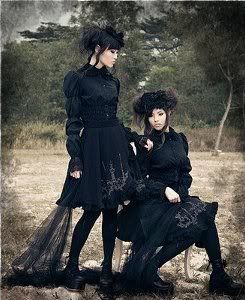
Originally this post was to present my all time favorite Skinny Puppy songs, including lyrical content, musical style, and the impact it had on me. However, as the list grew quite large, I decided to drop that topic and take up another. Here I list the Skinny Puppy discography. From Skinny Puppy's catalogue, I present one track that defines each album. The tracks below are regarded by fans and critics alike as the most influential and most definitive in the Puppy ouvre.
I shall discuss each track at length in order to highlight how the track reflects the album, why the track has such impact, and how the track shows the direction of Puppy's musical journey. Unless otherwise specified, interpretation of lyrics is mine or from the web other than that of the artist. Note that Puppy lyrics are dense and steeped in symbolism and double meanings. Compounding this is the fact that Ogre's song writing is stream of conscious. Theoretically, even he may not be fully conscious of the meanings in his songs. Keep this in mind. These are my interpretations, not definitive explanations of the tracks.
K-9 - Back and Forth (1984)
Skinny Puppy independently produced and released 50 copies of Back and Forth. The EP contains a few experimental tracks recorded in Puppy's early brap sessions. K-9 is regarded by critics as the first, true Skinny Puppy song, meaning that it is the first track to capture the band's signature sound and content. cEvin Key and Nivek Ogre confessed that their music, and the name of the band, referred to a dog's eye perspective of the world. Not only that, but the dog is malnourished and abused. K-9 is just that. Lyrically, it tells the story of a dog's life. The dog observes human behavior and finds it distasteful. Lines such as "Seeing through the keyhole/Watching master beat her" suggests the cruelty of man. "When the foe bears the control" supports this claim. The dog is neglected if not abused. "I sit in dung" suggests the master does not tend the dog's living area. Other lines consist of "It's not fit to piss in/Why not move so I won't stay/Kick me out." Even moving places would be better because at least the new place will be clean. Better yet, let the dog free as it could live happier on its own rather than under the roof of a neglectful owner. The animals over which we claim dominion are smarter than we think. "Wouldn't you think I have no thought?" The track firmly plants Skinny Puppy as defenders of animal rights.
Musically, the track is fairly straightforward. There is a punchy drum track with the distorted bass synth supporting it. Seemingly random guitar strums echo throughout as counterpoint to Ogre's modulated, growling vocals. Uptempo music with dark messages occurs frequently throughout Puppy's music. The tracks on Back and Forth were rereleased as Back and Forth: Series 2 along with several other earlier experimental tracks, demos, and live segments.
SMOTHERED HOPE - Remission (1984)
Perhaps Skinny Puppy's first if not greatest hit, Smothered Hope quickly defined not only the band's sound, but their attitude. It opens with a steady beat which builds and builds. The bass synth joins in and soon the song bursts forth with Ogre's acerbic vocal strains. "It's not in the rhyme or reason/so it goes with every season/crawl to top fall through bottom/first hand love is really rotten/slice of life find what's plenty/inch towards a sanctuary/fight with me inside the womb." Bells add nuance to the music, bringing it to another level. cEvin Key's synth melodies possess a ringing sound like glass, bells, or metal on metal. The effect is crisp and haunting. Underlying the melody is the distorted bass synth with a delay to really draw out the sound. The combination of driving beat, ringing melody, and distorted bass is indicative of Puppy's early sound.
Smothered Hope suggests depression, or more accurately, a bipolar disorder. Crawl to top fall through bottom, if that doesn't illustrate manic depression then I have no idea what does. The song closes with samples from Alfred Hitchcock's Shadow of a Doubt, "If the world's a hell, what's it matter what happens in it?" In the film, a young woman suspects her uncle of being a serial murderer. Smothered Hope, learned helplessness, depression, nihilism. When we view our lives as being without future or meaning, there is little rhyme or reason to anything we do. Hopelessness is a dangerous road. When there is nothing more to lose and nothing to gain, what is the point in living?
Talk on the web suggests that the song recounts Ogre's experience as a young child, having accidentally smothered his pet mouse, Hope, with a pillow. That tragedy well explains the mood of this piece and his current status as an outspoken animal rights activist.
ASSIMILATE - Bites (1985)
Ogre tests his machine gun vocal style in this frantic and complex track. It touches on a little of everything Skinny Puppy riles against, including organized religion, guns, nuclear weapons, animal testing, and the use of fear to control the masses. The lyrics read as a list of social ills, or signs of the impending apocalypse. Radiation, AIDS, guns, propaganda, religious intolerance, and the list goes on. "Crazy world of weary thought/So receive me had enough/lock me up/lock me up" If the world is insane, it is the sane who seek asylum.
Nietzsche referred to the masses as the flies of the market place. In Daoism, the valley spirit is yin, represented by society. Yin is responsive and prone to petty acts and narrow mindedness. The mountain spirit represents the hermit. Primarily yang, the individual is expansive and enlightened. On the other hand, the line could suggest that those who suffer a mental breakdown really experience a moment of clarity. They see the world for all the sickness it contains and it overwhelms them. They are locked away.
"Rot and assimilate/so hot to annihilate." Either become a contributing member of society and add to the problem, or society will seek to destroy you. The ultimatum of with us or against us applies. The conflict between the individual and society, a classic one. Although individuals make up society, moral responsibility is distributed across the whole. It is easy to say it is the other person's fault. Houses burn to the ground because everyone thinks someone else will call the fire department. Women are raped and murdered in plain view because someone else will intervene. The individual bears complete responsibility, is indeed burdened by it. The compulsion to lift that burden, to become complacent is strong. The individual represents what society has given up, moral responsibility. Society resents the individual as he or she presents a mirror in which society witnesses the monster it has become. Society cannot accept anything that is different or unique, nor can it admit its moral ambivalence. In order to maintain the veil, all must be assimilated into the collective.
And just for added measure, the closing stanza reiterates SP's position on animal testing. "Agony profusely stains the inner thinking of the brain/accusations clanking chains experiments with groans of pain/all prefer no one blames the terror in an animals screams/in cages our future - the answers insane." Clearly Ogre refers to the distribution of responsibility. In The Republic of Plato, Socrates says that in a democracy the dogs own the streets. How often have you seen an unclaimed dog in your neighborhood? No one calls the police. No one calls animal control. No one asks their neighbors if their dog is loose. It is someone else's problem. It is taken for granted that animals must suffer that we may benefit. Few openly admit this. Fewer wish to take responsibility.
As for the music, the beat is simple, the bass line driving. The synth melody, again, sounds like small glass bottles, adding a ringing, crystaline nuance to the piece. In sum, the song is angry to say the least. A friend of mine used to wrestle in high school. He would play this track just before a match. The sample, "Is it safe?" is from The Marathon Man.
DIG IT - Mind: the Perpetual Intercourse (1986)
Mind expands the Skinny Puppy sound with deeper base and bigger percussion. Beefing up the rhythm section distinguishes this album from the previous releases. Dig It is the breakthrough hit off the LP. The music is bare boned, crisp, clean, like the audio version of surgical steel. One may even style it as coldwave, having similar qualities to the music of Chemlab and 16 Volt. It comes on as little more than a drum machine, ringing synth, simplistic guitar riffs, and Ogre's vocals. Dig It inspired Trent Reznor to write Down In It. This led to the release of Pretty Hate Machine and mainstream exposure to electro-industrial music.
By most appearances, even Steven R Gilmore's sleeve art for the single, Dig It is a condemnation of the medical profession. Back in the day, medical students hired grave robbers to retrieve cadavers for study. Some students robbed graves themselves. The medical community has not evolved much since then. In their quest for greater understanding of anatomy and physiology, doctors have frequently left morality on the wayside. Science first, then ethics. This leads to animal experimentation, vivisection, and drugs more dangerous than the disease. Doctors are like mad scientists, seeking the elixir of immortality. "Practitioner of medicine/belong until the end/Bringing hope scars the point/extend eternity."
Ogre has a thing for word play. "Dig it/Dig it/Feel it/Unearthly remains." Does unearthly remains refer to something alien or does unearthly refer to unearthed, or dug up? In several instances, Ogre refers to a corporate slave. Money is the bottom line, not helping people. The medical community subsists by alleviating symptoms, not curing disease. As long as medicine is a for profit business there will unlikely be a cure for cancer. The most poetic stanza has to be the closing one. "Boils bitten haggard pick vomit kicking out/razor slide black eye shroud brain bespattered jaw/retaliate begrudgingly precise as what it seems/Fear of claim upon the cyst pent up carnal grin." This seemingly random assortment of words viewed from the mind's eye reminds one of a montage from a horror film. Black eye, brain, shroud, bespattered jaw. The doctor cuts away at the cadaver. Is the carnal grin the pulled features and bared skull of the corpse, or the intense desire for knowledge in the doctor's visage?
The line, Dig It, could refer to the cultural revolution of the 1960s. The hippies of yesterday have grown into the CEOs of today. Many have shrugged off their idealism in favor of corporate greed, becoming the one thing they most despised, the man.
"Open your eyes to verify the life experience."
ADDICTION - Cleanse Fold and Manipulate (1987)
Cleanse expands on the dimension added to Mind. The music is deeper and broader in scope. The undisputed break out track from this album is Addiction. I own about 8 or 9 different versions of this song, live, remixed, original, extended, and covered. Addiction is a great track in that its message is straight forward, the musicianship superb, and an air of autobiography ties it all together.
The music is lush. A simple 4/4 beat is accompanied by the signature distorted bass synth. Little by little the song expands and develops, becoming more intricate until Ogre takes the mic. "Desperate deranged talking in my sleep again/eyes twitch retain a sentimental something/looked lorn and we burned and we burned/I was a cinder body soul in my dreams." Is this a dream or a drug induced vision? Feeling deranged, burning sensations, are these the effects of the drug or the symptoms of withdrawal?
The chorus: "Breakdown amidst the mixtures/avoid addictive plea/responding disillusion/encrusted cruelty/describe why nails enclose me/eating so evenly/there exists a lot of reasons/to support fatality." The breakdown mentioned has a double meaning. For one, it is a mental breakdown as the will contends with the addictive plea. Secondly, the breakdown is chemical. The drugs enter the body and become a part of it. It breaks down within the system just as the system breaks down in response to the drug.
"Abstinence possessed/hardly what you think it is/hearts beat positive/provided there's progress/ignorance does insist/of the right coffin/took some food offered me/can't see myself drank the wine/wished the feverish burst of terror." Drug addiction is self-destructive behavior. One can keep from taking the drug as long as everything in life is okay. Should some negative experience enter one's life, then the drug is a refuge. One drinks, shoots up, or snorts wishing for that chemical response, something to kill the real emotion.
The song ends with the words "unbearably alive." Life is suffering. It is the first tenant in Buddha's four noble truths. To live is to suffer. Drugs are a way to temporarily alleviate the suffering, but the desired effect is fleeting. The first hit is the best, and the addict takes hit after hit, trying to relive that first experience. It is a destructive and vicious cycle which in the end brings only more suffering. "So pound the nails in tight/eyes screaming out of sight/against a grain like curtain/unbearably alive."
TESTURE - VIVISectVI (1988)
The developments in Mind and Cleanse led up to the creature known as VIVISectVI. Here Puppy really bares its fangs. Topics that were buried in symbolism are brought forward as blatantly as a slap in the face. Human Disease (S.K.U.M.M.) and Dogshit set the tone for the album, which is one of complete and utter contempt for the human race. Again, SP addresses the crimes committed by the medical community in the name of science. The title is in its own way a condemnation. The capitalized VI, when taken together, reads as 666, the number of the beast. The word, Sect, suggests a cult, the cult of medical testers.
Testure, a more down tempo track, maintains much of Puppy's signature sound. Heavy percussion, distorted bass, bell like synths are all there. Ogre's vocal treatment is more restrained. He lets the words, not his tone, carry the meaning to great effect. The restraint works well to support the somber tone of the song.
"In nervous convulsion crouches infant ape trembling in mother's shit/cage eyes tear less filled with contempt/clinic mask experiment with life and death/smell lingering noxious scent anxiety/omnipotent doctor grinds the cage door revealing love's primal instinct taken away." The life of the animals slated for medical experiments is traumatic and unsanitary. The doctor reaches in the cage to take the baby from the mother. Omnipotence suggests that the medical community is all powerful. This sentiment is mirrored by aggrotech artists, Angelspit. Doctors hold considerable sway over human and animal life. The trust invested in them is easily abused.
"Conscious of the pain/pass off as humane/white coat seems so clean/most dirt bleached out of greed." It is clear pain and suffering is being inflicted upon selfless animals. However, because it is done in order to supposedly save human life it is accepted. Whatever blood stains the hands can be washed off with money. "Eyes burn in a rabbit/push the pain test button/cut spine trip mucous infection/pills each day." There is something insidious about animal testing. It seems like inflicting pain just for the sake of pain. Common sense dictates what the result will be. Science claims to be amoral, objective. However, when reduced to dripping bleach into a rabbit's eyes hasn't science lost its way? If you force feed animals pills each day, if you inject them with viruses, surely it will have some undesired effect. What price is human well-being to account for the cost of animal lives?
"Smash price research rat/lab rent paid in flesh/more ill drug store sales/sharpen the knife/emphasis on money/new disease everyday." Animal testing is a vicious circle. There will always be disease and pharmaceutical companies selling drugs to counter those diseases. Animal testing is funded by the pharmaceutical companies, whose goal is not curing illness, but only alleviating symptoms. Until the cycle is broken, more animals will suffer and die.
"Kitten drags it's dead limb/continuing all suffering/it will come back and win/paralyze turn trauma burns out the will to live/the lying message 5 year genocide/1945 VIVISectVI." Abuse of animals leads to abuse of humans. It is seen in serial killers. Societies behave much like individuals. If they accept the torture of animals, it is just a measure of degrees before they accept the torture and killing of other races. 1945 marked the evacuation of several concentration camps. The holocaust was a 5 year genocide wherein gruesome experiments were conducted on human beings, including vivisection, the dissection of living human beings.
WORLOCK - Rabies (1989)
Rabies takes a step in a different direction. By adding Alain Jourgensen of Ministry to the mix, to say Rabies is more rock oriented is an understatement. Rodent is crisp and polished, pointing a finger at corporate greed. The track was used in a commercial to promote the film, The Boiler Room. Fascist Jock Itch, the first Puppy Song I ever heard, is heavily influence by thrash metal and punk. Jourgensen's fingerprints are all over this track. As one may expect, the fan reaction to Rabies was mixed. Some embraced the new sound, others felt Puppy had grown to commercial. In retrospect, though, Rabies had a lot to offer. Namely, the tracks Tin Omen and Worlock. Tin Omen, or Tienamen, is an account of student revolt. It retraces the Kent State revolt during the U.S. invasion of Cambodia. Four student were shot dead by the Ohio National Guard. The majority of wounded and dead were not protestors themselves, only passersby.
Many consider Worlock the greatest Skinny Puppy song. It is high upon my list of favorites as well. It is, as samples suggest, the story of the Tate murders as instigated by Charles Manson. The Manson family was a cult of personality. Manson, the Worlock, possessed considerable influence over his followers. Although he was not present at the murders, his influence was there. The song includes not only a guitar riff lifted from the Beatles' Helter Skelter, but Manson singing the lyrics as well.
At first listen, the lyrics seem random and meaningless. However, the real meaning is buried in metaphor and intricate details. "Eyedropping biopsy cyclops overlooks optic option rotten showstopper skinpopper babbler dabbler." The many references to eyes comes from the confessions of Manson family member, the "self confessed criminal." Had she the time, she would have removed the eyes of the victims and smeared them on the walls. For the lines showstopper and skinpopper, she also confessed to wanting to skin Frankie Sinatra alive while forcing him to listen to his own music.
The chorus goes, "Wasted views/that's all they see, Blue/Hot blood guild optic nerve/with the right attitude/you will succeed, Blue/Self abuse recluse/too late for me/make shifting peace/settling crazy things/keep your eyes open/soft spoken changes nothing/a view so cruel." Again, there are many references to eyes throughout. The Blue mentioned in the song was a Manson family member. She recorded music with Red, Gypsy, and the rest of the Manson family. The chorus sounds like Manson's words to Blue. "You will succeed, Blue" and "Too late for me" suggest she is acting in his place. Manson's goal was to change the world through the spread of violence and terror. He was the painter, Blue his brush. He the wizard, Blue the wand.
Skinny Puppy's dog's eye view of the world comes into play as the caretaker that discovered the murder scene had his dog with him. Anyone with any knowledge of Skinny Puppy as artists would know that they do not approve of murder. This is not a song applauding the actions of the Manson family, only an objective account of the experience.
Supporting the song was a video that presented many clips, often explicitly violent, taken from various horror movies. Though played in many clubs, networks banned the video. This ban, though partly based on the band not having paid royalties for the use of these images, was primarily due to the violent images portrayed on film. Severed limbs, punctured eyes, and other disturbing images abound. The single features a comment regarding violent images in horror films. Skinny Puppy are avid horror fans, and embrace violent images as long as they are special effects and not true violence. They defend horror movies and fight against censorship. Watching violent movies does not directly make you a violent person. Indeed, the members of Skinny Puppy are pacifists.
Tipper Gore went after Skinny Puppy for the images in their videos and the content of their songs. The fact that such a radically liberal band would be pursued by a democrat reveals what little understanding of the band the politicians had. Puppy has time and again proved their anti-war position, their defense of animals, and their defense of basic human rights. Man's inhumanity to man and the dangers of evil influence are the messages of this song. "Crazy words soft spoken." The devil speaks in whispers and always with a smile.
Politicians live in a world of isms. Patriotism, Nationalism, Socialism, Reformism, Republicanism, Liberalism. This world is populated by symbols, whether wearing flag pins or burning flags. Somehow simulated violence is more directly linked to actual violence than social ills. The real world is practical. Symbols are mere representations, no more definite than shadows. Poverty, gun control, unemployment, education, these are the actual causes of violence. Censors put the cart before the horse. There are horror movies, thus there is violence in the world. Wrong. Art follows life. Both Psycho and The Texas Chainsaw Massacre were based on the exploits of Ed Gein. However, politicians would blame Gein's behavior on the pulp crime magazines he read. Art makes an easy target. To point a finger at the true cause of violence would be to admit failure in governing.
The fact that censors, thinking the song is an evil influence, would seek to censor this song and thus block this message is the epitome of irony.
TORMENTOR - Too Dark Park (1990)
Too Dark Park is something of a masterpiece. It signifies the demarcation line between early Puppy fans and those coming late to the gruesome party. After the shift to Rabies, Skinny Puppy shifts again. It is a wonder fans didn't suffer whiplash. Too Dark Park at once returns to the themes explored in VIVISectVI, but pushes the dimensions of sound even further. The beat is pounding, the synth work crisp and symphonic, Ogre's vocal work strikes the appropriate mood, the samples are spot on. This is Puppy at top form, making Too Dark Park a definitive album. During the In Solvent See tour of 2009, at least as many songs in the set list had been lifted from this album as from the latest release, Mythmaker.
Even the art work experienced a shift. Steven R. Gilmore had created album art as cold, crisp, and eerie as the music in Bites and Remission. Too Dark Park is a different beast. Resembling the grotesque doodles of a marginalized teen, the album features numerous demonic creatures. The goal it seems was to present a toxic world. The music offers a better treatment. This album is a wake up call. Nature's Revenge, Grave Wisdom, Spasmolytic, just about every track features the declining state of the environment. However, of all these tracks, it is Tormentor of which I discuss.
Tormentor is the single off the album, and rightly so. It encapsulates the feel of Too Dark Park, both the symphonic, down tempo stuff and the pounding, hardcore stuff. Quite simply, the track is about electro-shock therapy. That shocking the brain can somehow restore a person's sanity is yet another cruel leap of faith committed by the medical community. Along with snake pits, hydro-therapy, and lobotomies, the electro-shock is just another example of science's dominance over humanity. Because the subjects are mentally disturbed, they cannot speak for themselves. They cannot decline treatment. For instance, the character in Zen and the Art of Motorcycle Maintenance tells a story of a college professor whose quest for defining quality led him to apparent madness. He was given a lobotomy that he had not approved. The chorus, "Mental shock/disturbed thoughts rotting/long lasting reaction/make it stop/stir up the pot/taking away means nothing." The key phrases here are stir up the pot, or scramble the brain, and taking away means nothing. To wipe the mind through applied electric shocks, or worse, too slice away the frontal lobe of the brain does more harm than good. How can taking something away improve the mind?
Parallels to animal testing run throughout the track. Just as in Testure, cruelty to animals leads to cruelty to man and vice versa. The opening stanza, "Walls trapped within yellow eyes/the cutters drooling face rips apart/cuts to the heart," suggests the cutter, or doctor, rips apart and cuts to the heart. Vivisection.
There are lasting repercussions to such experiments. Someone suffering from a mood disorder is reduced to a gibbering vegetable. "Distorted moodswing smile/altered music shadow covers/melted honey bitter pie/she utters tasting quite lovely." Doctors deliberately alter the perception of disturbed individuals in order to restore them to normalcy. This theme hearkens back to Assimilate, wherein those that are identified as different are either assimilated or destroyed. Of course, the perceptions altered are not always the desired result. Language, motor skills, memories, affective responses can be damaged in the process.
It matters little whether the track is about animal or human rights as the two are linked, pretty much presenting the same argument. We must not forget that this song is about the tormentor, not the tormented. "Forget you are human and remember you are a god." This sample, like most of Skinny Puppy's samples, links directly with the track. Doctors play god. They make life and death decisions, determine the choices made by their patients, and so on. Many a doctor has suffered the god complex. "Forget you are human," that is, remove humanity from your personality. Archaic concepts like "mercy" or "pity" no longer apply. Such caution limits one's power. Drop them and you are like a god, beyond good and evil.
If you have ever read an Ayn Rand novel, then you know the type. Petty moral concepts like altruism chain the masculine hero. Only by dropping such limitations can man fully live his potential, that of a world mover. Like Nietzsche wrote, all great men are evil. That is the theory. In practice such individuals create monsters, not better worlds. It is the lesson learned in Mary Shelley's Frankenstein. Science without ethics designs weapons of mass destruction, super viruses, toxic waste. Tormentor is the dark side of Rand's philosophy of egoism. The video game, Bioshock, presents this philosophy when taken to the extreme, mirroring Skinny Puppy's point of view. Remove ethics from the equation and the formula results in madness, suffering, and death.
Science is a tool, like a hammer. In the hands of the sensitive artist, it creates a house. In the hands of the heartless, it batters in a skull.
KILLING GAME - Last Rights (1992)
Last Rights is widely regarded as Puppy's most ambitious album. To many younger fans, this was their first album. That the video for Killing Game aired on MTV helps matters as it exposed Skinny Puppy to a broader audience. Personally, I found Last Rights disappointing. As a follow up to Too Dark Park, I think Last Rights lacks the same impact. The tracks are uneven making the overall album unbalanced. Some tracks do little to contribute to the whole. Lust Chance as an instrumental is just passable. Download is nothing more than a random collection of digital bleeps and white noise. Love in Vein is an open admission of the heroin use that would change Skinny Puppy forever. This is not to say I hate the album, only I do not list it high in my favorites.
That said, Killing Game is one of the stronger tracks off this release. The track is downtempo. It is not a dance track by any means. Killing Game is all about atmosphere. This point is driven home by histrionic vocals from Ogre that make Worlock seem restrained. Killing Game presents the ultimate question. Why is there war and violence? "Who taught the killing game first?"
"Fallen angel head crashes dead out of control/lost memories staircase twists/darker rooms lit with left out toys/after playing mean changes toys into tools/twisted playthings on the staircase fools/fools weapons represents the killing game." There is a lot going on in this stanza. In some versions of the gospel, war is taught to man by fallen angels. Perhaps war and violence are memories from the war in heaven. Left out toys are the weapons of past generations, the slings and arrows of ages past. Playing mean and changing toys into tools suggests moving from simple, childhood games to full on war. Cops and robbers turns into spy versus spy. The wrestling between boys becomes the bar fights of adults. Twisted playthings on a staircase. The twisted playthings are weapons, the staircase possibly the double helix of human DNA. Is violence and war embedded in our genetic make-up? Are weapons hardwired into our genome?
The chorus goes, "Who taught the killing game?/time's taught the killing game herself/no, I taught the killing game myself." The crux of this song is who is responsible for violence and war. Is violence a part of our heritage, something left to us by our ancestors? Ogre says no. He taught the killing game. Going back to Assimilate, Killing Game is about moral responsibility. War and violence is not a product of the past, but of the present. We choose as individuals to engage in acts of violence. We have free will and can end war if we only choose that course of action. The responsibility of violence is on each individual. However, as society tends to distribute responsibility, essentially passing the buck, the assimilated person does not regard himself as contributing to the violence.
The rest of the song is a list of violent acts. Pushing faces into glass, spewing venom, tooth and nail. These horrific images are a testament of man's violent nature. However, this nature is an affectation. It is not inherent or innate. It is studied and selective. "I taught the killing game first."
HARDSET HEAD - The Process (1996)
The Process attempted to carry on with the style developed on Last Rights. However, it was plagued with problems. Ogre's addiction to cocaine caused the greatest schism in the band, yet this was not helped by heroin and marijuana use by the rest of the band. The new label, American Records, found Puppy to be a thorn in their side. The release date kept being pushed back as the rift in the band increased and increased. Puppy saw a number of producers come and go (three in all). Unhappy with the original recordings, American had the band rerecord the tracks. Finally, Ogre left the band. Two years later, Dwayne Goetell died in his parent's home from an apparent heroin overdose. Everyone thought this would be the last Puppy album, their last bark.
The Process, like Burning from the Inside by Bauhaus, is an audio representation of a band falling apart. While many would prefer to forget this album, The Process offers a few swan songs. Skinny Puppy manages to produce some decent tracks despite the difficulties. Candle, Amnesia, Jahya, and Process are solid tracks, but Hardset Head sets itself apart.
Musically the track makes use of advancements in technology. Driving, acerbic, and sharp, Hardset Head is also polished to a sheen. I consider the bass line one of the coolest in the Puppy ouvre. Electric guitar comes to the forefront when before it was used primarily for rhythmic effect. Structurally, Hardset Head seems designed for a mosh pit. The stanzas are somewhat subdued and the chorus comes on like a blitz. Ogre goes from near deadpan singing to passionate screams.
Lyrically, Hardset Head presents some difficulty. The stream of consciousness lyrics are particularly dense, resembling an indecipherable mess of random words. Past interpretations of similarly styled songs have cracked the egg, so to speak, revealing deeper meaning. In the past, selected samples (usually from horror films) establish the intent of the track. Hardset Head, as the title implies, is stubborn. Hard-set suggests something rigid or fixed. A harset head is one that cannot be moved, a mind that cannot be changed. Stubbornness seems to be the theme.
The best hint to the lyrics is likely the two words, "silent noise." Silent noise, like deafening silence, is an oxymoron. The image is one of people speaking, yet saying nothing. In the information age, the overwhelming majority of information is nothing more than static, white noise. Political pundits blather about, listing off sound bites and talking points, but not adding anything to the discourse. The opposition puts up a wall, stubbornly refusing to accept the position of the other party. They volley meaningless tautologies and straw man arguments back and forth. In the end, nothing comes of it but deeper trenches. On the other hand, silent noise could very well imply a lie of omission. By not making an admission, by withholding the truth, one just adds to the noise of falsehood and misunderstanding.
All this is superficial reaction. Deeper meaning lies in the album as a whole. The Process, believe or not, is a concept album. Ogre established a professional friendship with inspirational source and mentor, Genesis P-Orridge of Throbbing Gristle, the originators of industrial music. Very much a product of the 1960s, Genesis spoke to Ogre about the culture wars of the time. Hippie culture embraced Eastern philosophy. This started with the Beat generation, but flourished in the late '60s. Hinduism, Daoism, Buddhism, Sikhism. A religious cult emerged, a collection of individuals seeking enlightenment through the process. The process was a system of opening oneself to all modes of thought. To choose one system over another is to shut the mind to truths inherent in those religions or philosophies. The process embraces all modes of thought, believing that each holds some aspect of truth. Deny one and you might as well deny them all.
Taken in this vein, the complex lyrics unravel into something more comprehensible. "Driven with (event width)/two paths given/pure force downs/turns the screw crawling back." Driven with two paths. For most there are two opposing forces. Yin and yang, right and wrong, good and evil, socialist and capitalist, conservative and liberal. There are two kinds of people in the world, those who divide people into two groups and those that don't. People create opposition by choosing one perspective over another. "Pure force downs" quite directly links to down force which connects to the previous line, "driven." Forward momentum creates down force. Pursuing one path or another just roots you more deeply in that belief system, just as the faster the exotic sports car, the more the spoiler holds it to the road. "Turns the screw" fixes one to the spot. The direction is not forward, but down. No, the direction is backward. "Crawling back" suggests a regression. In his stubbornness, in his denial of other systems of thought, man essentially crawls back into the primordial ooze.
"In term space - a time to intrude/in term peace - assuring a future." If you view the universe in spacial terms, it follows that everything is divided into this and that, mine and yours. Space is something to intrude upon, to fill, to invade. If you view the universe with a peaceful mind, it follows that the universe is a totality. There is no this and that. All is one. No need for war, no need for greed. Each cares after the other as any one thing is but an extension of the whole. Thus, the future is assured.
The chorus follows. "Silence noise forming sound like silent noise/silent voice screaming hints retaliation." We have discussed the well-nigh impenetrable image that is silent noise. The line that calls attention to itself, though, is retaliation. Hardset Head is about opposition. Pick a side and immediately you are presented with an enemy, those who don't believe as you do. In his essay, The Rebel, Albert Camus states that it is better by far to neither be master or slave. The slave is exploited while the master is morally diminished. Taiji is the balance between the poles of yin and yang, the middle between the extremes. However, wuji exists outside the boundaries of yin and yang. It falls nowhere on the scale. It exists outside the scale.
"Heinous plans in sides remain taking downs taking aim/filling curses two conditions back upon itself." The extension to opposition is contention. Each side plans to overthrow or undermine the other. However, neither realizes such intimations belie the frailty of their beliefs. That one must convert or destroy the unbeliever strangely empowers the enemy. The inquisitor admits he finds the miscreant a threat. Hate and fury are born from fear and doubt.
"Pass it off as good intentions leaving marks hard to heal/re-assisted retrogression leaving tracks path reveals/sample act reflected clears noticed thought while leaving hears/nuisance labels paranoia so stupid how perceived that way." Attacking the opposition is not just to better establish one's own position, but is to educate the enemy. They are wayward. We bring them the truth. Converting natives to Catholicism is but one example. Historically empires have bathed whole peoples in blood supposedly with the best of intentions. The more tightly one holds onto an archaic system of thought, the more rooted is he in the past. In Daoism, righteousness creates evil. Only by pointing out evil does it come into being. This is known as codependent arising. Man exists, therefore there is woman. An item is hot, therefore things can be cold. God created evil simply by looking at his creation and saying the words, "It is good." By definition, anything opposing his creation (darkness to light) was evil.
"Shaman stands retreating all is over evermore smoke the curse your creation back upon yourself." Stand retreating, another oxymoron. However, in context we see that narrow-mindedness stunts the progress of man. If one destroys the opposition, one in essence destroys his point of view. Without light, darkness has no meaning. Without pain there can be no pleasure. Without hate there can be no love.
The silent noise that presents such a problem reveals itself as ignorance. Stubborn pursuit of one system of thought at the expense of all others is ignorance. The despot, the pundit, the scientist, the zealot all portray their ignorance simply by dismissing the opposing point of view. The final line reads, "silent truth asserts its proof like you abhor." Nothing defines ignorance quite like intolerance. The open minded, the progressive person, at least considers another point of view in order to come to a greater truth. The ignorant person dismisses it out of hand.
Hardset Head appears on the soundtrack for American Werewolf in Paris.
PRO-TEST - The Greater Wrong of the Right (2004)
According to some fans, Puppy should have left it at The Process. They should never have gotten back together. The passing of Dwayne Goetell spelled the end of an era. I am not one of those fans. When I spotted this album, I was overjoyed (if not just a little shocked) that an old favorite had reunited. When I played the album I was in for a greater surprise. That Puppy had changed its sound again was expected. They had evolved their sound over the years from album to album. What surprised me was how accessible it is.
The Process had been regarded as the bands most commercial album, clearly having more to do with the label than the artist. Greater Wrong of the Right is different. After an eight year hiatus, Puppy returns with a new direction. Ogre brings his more hip hop and pop influenced vocal style he developed on his solo project, oHgr. Meanwhile, cEvin Key creates richer and more varied music, showing his experiences gained over several projects, solo and otherwise. Together the combo create my favorite album. I know I risk humiliation or worse from other fans, but for me it gets no better than The Greater Wrong of the Right. I am a Puppy fan. yet, there are tracks I simply do not like and I have deleted them from my iPod. There are also those tracks that I can give or take. Each track on Greater Wrong of the Right is a gem. I have given a five star rating to each. If the track plays on my iPod, I am liable to crank up the volume. I may even repeat the track.
First and foremost, GWR is Puppy's response to the politics of George W. Bush. Of course, Puppy being Puppy, this is not as obvious as with Ministry or KMFDM, but it is there just the same. Daddyuwarbash, Neuwerld, and Downsizer are but three examples. The kicker, though, is pro-test. Pro-test is an out and out condemnation of conservative politics. Ironically, when alerted that Puppy performed anti-Bush songs, the right wing voiced opposition. This only encouraged those who felt similarly about the current political climate to attend Puppy's shows and to purchase the album. Despite many fans hating on this album, Pro-Test is a top download from the band on Amazon.com.
Musically, Pro-test owes a great deal to oHgr. The machine gun vocals, the clear message, the more accessible sound all point in that direction. However, it remains intrinsically Skinny Puppy. If you were to go back and listen to The Process, you would notice how it bridges the gap between Last Rights and Greater Wrong of the Right. The guitar, the polish, the accessibility suggest that is the direction they were going. GWR simply takes up where Puppy had left off, only years later. Pro-test is an onslaught of guitar, synth, and drums. Samples are used sparingly, but to great effect, adding nuance to the politically charged theme. If I had any complaint, it would be that Ogre's vocals are too modulated, making it difficult to make out the words, an issue already extant in skinny Puppy songs.
"Hit me on the street while waiting to do nothing/where within the space can anything feel certain?/look into the future make out the word speak/send in the spies to watch them." Several things going on here. First of all, paranoia. Who is the enemy? After 911 people were afraid of their own shadow. Anyone could be a threat. The government at the time took advantage of such fears. The Patriot Act was signed into law in order to provide the government the ability to spy on its citizens in order to root out possible future terrorist attacks. However, if one strips the nation of its liberty and protection from the government, does that not validate the terrorist's actions? Terror is to spread panic and distrust. The best response to terrorism is to go about your daily lives, however hard that may sound. "Hit me on the street" is a bit much as protestors to the Patriot Act did not openly (that is, publicly) suffer the same violent reaction as protestors during the civil rights movement and the Vietnam War.
"Creepy are the people unable to do something/sitting on an armchair fenced in their creation/look up to be there anywhere is somewhere/itchy past scratch the itch." Those who fight for the Patriot Act, and those that sign it into law, must fall under the same rules. They, too, are caged or "fenced in" under the watchful eye of their creation. They willingly give up their rights through fear.
"Feel about a nation so precious is the freedom/carousal the brass ring reach into a black mass/So it's corroded so it's polluted/we all want some of it." When patriotism is more important than the laws of the land, then you have entered a Nationalist society. Fascism is built on the shoulders of bullies. In this manner, the country is not so much ruled as stolen. What does it matter if the constitution is ignored as long as they stay in power? That power is meaningless if gained at the expense of what makes America great, liberty. Grab the corroded brass ring in order to rule a polluted world, a world without regulation.
"Maybe all the people now left without no loving/where with all the strength gone better see it coming/get off the fence trip rip up the garbage/make it up to the earth, bitch." Love depends on trust. Take away trust and there is no love. When people fear and hate, it saps both mental and physical energy, energy that could be used more effectively. To worry over something that may not happen is a waste. To distrust every person you meet is to prevent any healthy relationship. When people care nothing for each other, they care even less for the environment. Stop shutting out others and the world gets smaller. Enemy becomes neighbor. The earth suffers from neglect.
"Be a politician eroding all your freedoms/down the rabbit hole cracks money markets fall/through a looking glass time becomes too fast/all to benefit the rich." Politics serves constituencies. Greased palms make the world go round. When politics serve the rich, only the rich get served. Focus is on making the rich richer at the expense of the poor. In essence, this line predicts the coming financial meltdown. Remove regulations from financial institutions, and corruption rears its ugly head. To serve the few over the many turns society upside down. Majority rule has no real meaning.
"So keep eating from the apple inches from the center/shaken to the core until it doesn't matter/no one to turn to nowhere to run to/better the bomb to blow it." The apple here clearly represents that in the bible, the forbidden fruit of knowledge. However, instead of knowledge, it is power. As you move further from the center (moderate) you move further to the left or right (liberal or conservative). Eventually you move so far to the extreme that there is no turning back. Little by little the constitution is stripped away. Finally, in a throw back to '80s culture, you might as well drop the atom bomb as America has been destroyed just the same.
Whether or not you agree with the politics, the message is clear. Skinny Puppy has frequently reflected the zeitgeist in each release. Whether aids, war, the environment, or politics, SP has commented on current events of the time. This is no different. Not only does the song rock, it continues the tradition of Skinny Puppy: to view the world through the eyes of the marginalized and abused. The band proves that an old dog can learn new tricks. Pro-test attests to Skinny Puppy's comeback, proving they still have relevance some 20 years later.
The video is unlike any other from Skinny Puppy. Simply put, a number of rivet heads run into a number of b-boys and have a dance off. The dancing is superb and fits the danceability of the music, though it seems the anti-Bush statement is buried in subtext if not altogether discarded.
HAZE - Mythmaker (2007)
With such a recent album it is difficult to pick out something definitive or lasting, but Haze shows promise. Personally, Jaher off the same album is my favorite from Mythmaker. Indeed, it is currently my favorite Puppy song. However, Haze has shown a greater response. Furthermore, a video has been released to support the track.
Musically, Mythmaker continues what started with Greater Wrong of the Right while attempting to relive the glory of Last Rights. Mythmaker is an ambitious album and features many, striking tracks. However, like Last Rights, Mythmaker suffers a lack of balance. Some of the tracks I simply do not like. Mythmaker, as the name suggests, is an album about perception and deceit. Magnifishit spotlights those who make false claims, who are self aggrandizing, who play up their importance. "I am the undisputed lie," is but one of the lines. People create their own mythology, building up a false persona. Ugli points out the inconsistencies in the perception of Jesus. If Jesus is about love and compassion, why are his professed followers hateful and intolerant? "Jesus wants to be ugly" is not a condemnation of religion, but a condemnation of hypocrisy.
Haze is a downtempo track in the vein of Killing Game and Testure. As usual, the lyrics are complex. "Death feels like the butterfly/can't escape the scarred lie/real relationships must die/underneath the scarred lie." The death card in the tarot represents a transformation, hence a butterfly. Death is not an end, but a transition. When one is deceitful, it is impossible to maintain a real relationship. Meaningful relationships require trust. By lying, one kills any chance of an actual relationship. The metamorphosis, like that in Kafka, is a degeneration. The butterfly into a worm. The scar, the emotional scars of a failed relationship.
"We globalize the others' lies/we sanctify the great disguise/what if change gate/don't watch it show your shape/desperate in death/death will tell them/death will kill them/death will tell." We are implicit in the the global lie. As long as we do not question, do not verify, we maintain the illusion. In this sense, we are all worms. However, truth will out. There is an honesty in death. Medical examiners know that the dead speak and they do not lie. After we have passed, our true selves will be known. Secrets and lies are revealed. Societies follow the same principle. The great conspiracies, the global lies reveal themselves after the fall.
"Now I'll break out tonight/I'll escape light light/I'll escape one tonight/Gravitate slice slice." The worm finally escapes the prison of deceit. It leaves the world of darkness for the light. Illumination. Gravitate - the worm is drawn to the earth, to things of a solid nature. Slice slice - the worm has regenerative abilities. It cuts away the injured half, the corrupt half. Although the worm must separate to escape, it remains whole. Such is the power of regeneration. The emotional scar is what remains of the worm's escape from the lie. Death is the butterfly, the worm coming to terms with its own truth.
There are several layers of meaning. 1) It is a political statement regarding a government ruled by fear and lies. 2) It is an account of one's escape from an abusive, distrustful relationship. 3) It is a song about suicide. Death is the only thing that offers truth.
The third option I dismiss as Deep Down Trauma Hounds off Cleanse Fold and Manipulate reveals Ogre's distaste for suicide. Better to grow from suffering than allow it to destroy you. Haze reminds me of a hexagram from the Yi Jing, the Classic Book of Changes. Youthful Folly presents an image of a mist covering a mountain. The mountain represents knowledge. The mist obscures that knowledge. Water in the Yi Jing embodies danger and falsehood. Haze is a song about deceit, whether between individuals or between a government and its people. When the truth is obscured, trust is violated. When trust is violated, relationships are false. Seeking the truth is painful. One must become an exile, cutting oneself off from society. Only then can one emerge free and whole. Haze is falsehood, killer of trust.
Skinny Puppy fan, Jolene Siana, wrote Ogre several letters over the course of her life as an abused child. Jolene sought refuge from her mother in Puppy's music, drugs, and the act of cutting. Cutting is a widely misunderstood and maligned practice. Although I in no way condone the act, I can see how it may provide some psychological relief from the stress of adolescence. Sometimes pain may be all there is to remind someone they are still alive, that they still feel. Jolene contemplated suicide often, but did not carry out the act. In the end, her letters to Ogre gave her that human connection she needed. Ogre had kept her letters and one day, as promised, returned them to her. She has since published those letters in a book titled "Ask Ogre: Letters from a Deathrock Cutter." The book is bleak to say the least.
Haze shares striking similarities to her story of an escape from an abusive relationship. If there is anything Skinny Puppy cannot abide it is the abuse of power or trust, whether the abuse of humans or animals. Haze could very well be Ogre's attempt at retelling her story, although this is just one possible suggestion.
Skinny Puppy's latest album has been postponed due to the fact that SPV records is claiming insolvency. For legal reasons, the album cannot be released. The album was to drop in October, but has been pushed back to the end of the year (if then). Puppy scheduled a tour to promote the new album finding that they could not perform the new material. Instead, they played selections from their back catalogue, including some songs previously never performed live. After the release of the their 13th album (strangely affected by a stroke of bad luck) I shall add another track to this blog. Until then I wish Skinny Puppy continued success. Here is to a long and productive career in experimental music.

 Rhythm plays a vital role in music, dance, and the martial arts. It features in sport as well. Little chance has a rowing team if the stroke is off. Even the sexual act enjoys some rhythmic motions.