Saturday, August 29, 2009

What is Industrial Music?

Industrial music started with Throbbing Gristle, a London based performance art troupe, performing a fusion of acid rock, punk, and experimental music. The band toyed with such diverse themes as sexual ambiguity and man's inhumanity to man. Often discordant, frequently disturbing, TG paved the way for a new genre. Indeed, the term "Industrial" is derived from Industrial Records, the label under which Throbbing Gristle recorded. Similar artists followed, such as the acid rock flavored Chrome, the avant guard electronic group Cabaret Voltaire, and the counter-cultural phenomenon known as SPK. Each group had a distinct sound, yet shared certain traits. Namely these traits are related to the anti-music stamp leaden on this style of music.

Aside from the aforementioned musical and performance origins, Industrial music owes a great deal to the musique concrete movement. This type of music developed from using found sounds and prerecorded material to create original music. This technique and the technology involved also inspired the Hip Hop and Rap movement. The band, Faust, are a little known but very influential musique concrete act. They included tape loops and found sounds that, figuratively, threw in the kitchen sink. As for the electronic music aspect of Industrial music, not enough praise can be shown to KRAFTWERK, who invented the drum machine.

The first wave of Industrial music did not last long. However, new bands were inspired by this shocking blend of new sounds and cultural revolution. Bands like Skinny Puppy, KMFDM, and Ministry picked up the mantle and soldiered on. Many critics claim that this second wave is not proper Industrial music, and that this is merely a case of electronic music, rock, or metal. Other critics, however, spread the industrial net even further to include alternative artists such as Sonic Youth, Therapy?, and Killing Joke. This continues to be a heated topic of debate. Even Cap'n K (Sascha Konietzko) of KMFDM holds to the purist opinion of Industrial music. He calls his style of music Ultra Heavy Beat, though refers to himself (with tongue firmly in cheek) as the originator of industrial music. This style of music saw a good deal of popularity during the early '90s as the '80s goth scene died down. Listeners seeking dark, bleak music went for this more aggressive incarnation. Many goths ended up listening to Skinny Puppy, Front Line Assembly, and Front 242.

Industrial music hit mainstream popularity with the arrival of Nine Inch Nails' debut release, Pretty Hate Machine. This masterpiece of religious doubt, unrequited love, burning desire, and dark obsession appealed to the puberty-suffering tweens. Yet, the music is well crafted to appeal to the matured ear as well. Trent Reznor has made no qualms as to being inspired by bands like Skinny Puppy, thus indicating his place in the ever growing family tree.

Today Industrial music is very strong, particularly in Germany, Canada, and the U.S. Even Mexico and Australia have Industrial bands such as Hocico and Angelspit. The scene is very broad and has evolved even more. Industrial music has branched out into several subgenres. The first of these is Electronic Body Music, or EBM, as pioneered by the likes of Belgium's Front 242. EBM is distinguished by, of course, being even more electronic in production. Sequencers are frequently used, and the primary trend is to produce highly danceable music. EBM artists include Neuroticfish, A Split Second, and Nitzer Ebb. A recent offspring from EBM is futurepop, which takes the electronic, dark elements of EBM and includes more popular or mainstream elements. Futurepop was developed to move electronic dance music away from the Industrial scene which, after the release of :wumpscut:'s "Soylent Green," had grown somewhat stagnant as many in the scene were copying that style. Futurepop as a term was coined by members, and frequent tour mates, of the bands VNV Nation and Apoptygma Berzerk.

Industrial music fans are called rivet heads. Rivet Head is a fairly recent term inspired by the song from coldwave band, Chemlab. This causes some confusions as fans of Iron Maiden are also known as rivet heads. Many goth sites refer to the rivet head as a recent phenomenon, even tough industrial music predates gothic rock by a number of years. This is because the rivet head look is relatively new. The style is anti-fashion. The look, particularly for men which comprise the majority of industrial fans, is often military inspired. Flight jackets, cargo pants, combat boots, camouflage, and flak jackets are common. A concert Tee shirt is usually a staple, particular if the band is very underground. Hair styles are often extreme, typically requiring shaving shapes into the head, though dreadlocks are an option. Facial and other piercings are common. Bondage wear is typical as well, particularly in the wearing of clasps, chains, straps, grommets, and D-clips. Women can dress simalarly, but generally go for a sleeker, more cyber look. Often this takes the shape of a vinyl or latex one piece. Bondage gear is very big with women riveters. The image is of a cybergoth, a fan of more electronically inclined industrial music.


Here is a brief breakdown of the various industrial subgenres, characteristics, and band(s) in the scene.

Aggrotech - Extremely aggressive take on electro industrial/EBM as performed by the likes of Angelspit and Hocico. Also known simply as Agro.

Ambient Industrial - Industrial inspired background music as performed by mid-stage Delirium and similar artists. The music is darkly atmospheric, but also very electronic.

Coldwave - Austere, clinically executed, sharp, crisp electro-industrial music as performed by Chemlab, Birmingham 6, 16 Volt, and early Spahn Ranch.

Cybergoth - Subculture embracing electro-industrial, EBM, futurepop, hard trance, darkwave, and electronica.

Dark Disco - Electronic dance music (EDM) with electro-industrial roots. Although hearkening back to the mirrorball days, dark disco focuses on the darker aspects of '70s pop culture. This includes sex, drugs, bondage, grindhouse films, pornography, and devil worship. My Life with the Thrill Kill Kult is the best example of this unusual fusion.

Electro-Industrial - Form of industrial music started in the early to mid '80s by groups like Skinny Puppy and Front Line Assembly. This style features many samples from film and television as well synth melodies, aggressive drum beats, distorted guitar, and angry vocals.

Electronic Body Music - EBM, a highly danceable offshoot of electro-industrial music with a heavy dependence on sequencers as performed by Front 242 Neuroticfish, and Nitzer Ebb.

Endzeit Electro - Or Helectro is a form of aggrotech geared towards the darker aspects of human nature and man's inhumanity to man. Even so, the music can be quite cathartic and even beautiful. Bands include :wumpscut:, Leather Strip, Velvet Acid Christ, Combichrist, and Suicide Commando.

Experimental-Industrial - Experimental music featuring metallic percussion and improvised instruments. Einsturzende Neubauten and Test Dept. are perfect examples. Some might say that this is the only true industrial music.

Futurepop - Offshoot of EBM featuring more mainstream elements from popular music. This is an intriguing and burgeoning style with a lot of promise and wide appeal. Artists include VNV Nation, Apoptygma Berzerk, Covenant, Assemblage 23, and Edge of Dawn.

Grindcore - Proto-industrial metal music with a brutal, minimalist sound. Music features usually a drum machine, and electric bass, distorted guitar, and growly vocals. There is virtually no mid-range instrumentation. The beat is ponderous, often described as lurch and crunch. Godflesh is the best example, and often cited as the pioneers of the form.

Industrial Metal - Heavy metal with an industrial inspired sound, that is the inclusion of machine sounds like gears and metal percussion as performed by Ministry and Die Krupps.

Industrial Music - general term for all industrial styles of music, but more specific to the original artists of the mid to late '70s, such as Throbbing Gristle and Cabaret Voltaire.

Industrial Rock - Aggressive style of rock music usually, but not necessarily with a heavily political direction. This includes Therapy?, Killing Joke, Mussolini Headkick, and Cop Shoot Cop. This style is a nice gateway introduction to the industrial music scene.

Martial-Industrial - Style of music heavily influenced by military and classical music. Laibach is the best example of the martial-industrial sound. Drums are particularly done as marches and vocals are operatic.

Neue Deutsche Harte - Or New German Metal, the fusion of electo-industrial music with German metal. This style is great fun and features artists like Rammstein, Megaherz, and Eisbrecher.

Join in the Chant!

Thursday, August 27, 2009

Dead Rising - A Revisiting

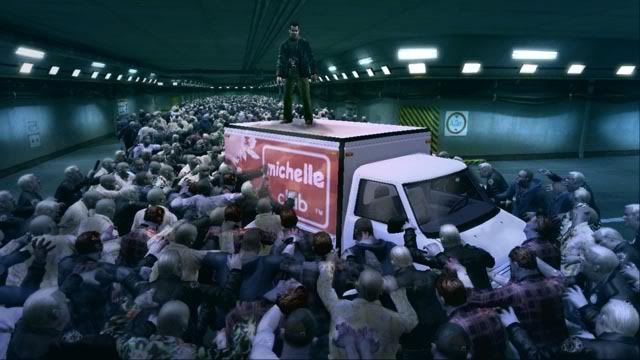
Since we purchased a second XBox 360, I have been replaying old games to unlock achievements. This has provided me the reason to play Dead Rising once more. In the third installment of the InsideOutcast, we spoke much about zombies, so the topic is still fresh on my mind.

The basic story is that you play Frank, a photographer, who is investigating peculiar events taking place in Willamette, Colorado. Your first exposure to the zombie infestation is from a helicopter. A quick tutorial on how to take photos is also a means to build the suspense. Eventually you make it to the Willamette mall. From then on it is a balancing act between rescuing survivors and investigating the main story.

The first thing about Dead Rising is don't expect to get through the story the first time. It is unlikely to go that way. Frank is not very powerful early on. You will likely die or fail to meet the requirements to continue the story. I would suggest starting out with the Zombie Genocide achievement. Forget the story. Simply head outside to the parking garage. There is a red convertible just sitting out in the near corner of a parking lot. Climb in and head down into the parking garage proper. Turn left and keep going until you reach a dead end. Take care to avoid zombies pushing along tanks of oxygen as this can further damage your car. At the dead end, make a U turn and head back to the entrance. Drive over a few more zombies and then head for a respawned version of your convertible. Repeat. This may take several hours. However, not only will you climb levels like crazy, but you are rewarded with MegaMan's energy gun. This thing can take out any boss in just moments (except the final boss, of course).

Another trick is how to extend the use of the chainsaws you win off defeating Adam, the clown. You will need to pick up the books for engineering, entertainment, and sharp weapons. Two are in Paradise Plaza, the third is in Wonderland. Each book triples the life span of your weapon, so all three increases the duration by 27 times. having the chainsaws and the gun will make things a lot easier.

Dead Rising has a lot of replay value in that you do not necessarily have to follow the story, nor do you need to rescue any survivors. The big draw is killing zombies, and just about every object you grab from a handful of CDs to a wooden bench will aid you in that cause. You also gain hand to hand abilities as you increase levels, allowing you to rip the heads off zombies or to tear out their entrails. My favorite technique is the hammer throw, wherein Frank sends a zombie running into and knocking over several other zombies. Not only does this clear a path, but if done multiple times it will destroy several zombies quite effectively. If you snap a photo of the running zombie, you will earn a few experience or "Prestige Points" for comic effect.

Experience can be made easily by snapping decent photos. Books can be equipped to multiply the effect. The best Erotica shot requires you to follow the story until Brad gets shot. As Jessica tends to him, step outside the door. Get her in frame. Snap a photo for 1,000 or so PP. You should get a photo bonus for a character picture, drama, and her cleavage. For drama there is a couple dangling off a giant bear in Wonderland Plaza. Snap a photo of one of the hapless victims hanging on for dear life.

Dead Rising isn't all fun and games, though. It suffers from insanely small writing which even on a flat screen TV requires a fair bit of squinting. Furthermore, many of the survivors suffer from poor AI or just hellish programmers. Escorting survivors is like herding cats. Some wander off, some go running after zombies, some lag behind, some get stuck in corners, and some will injure you with their weapon (if equipped).

My greatest complaint against the game, though, are two achievements in survivor mode. Survivor mode has to be the most boring game mode ever devised. The idea is to stay alive within the mall for 5 to 7 days (an achievement for each). The game cannot be saved. Food items do not respawn. Frank suffers incremental damage over time. This requires something like ten uninterrupted hours of gameplay, which consists of avoiding zombies and hoarding food. It is like watching snow melt, only you have to pay enough attention that Frank does not starve to death. This is grossly unprofessional and even negligent, as the 360 is prone to overheating. They couldn't think of a better mini game?

Hopefully many of the downsides of Dead Rising will be corrected for the second installment. We will see. Anyhow, I recommend Dead Rising despite its many faults as it is simply a blast to kill zombies in what is obviously an homage to Romero's Dawn of the Dead.

Saturday, August 22, 2009

The Dubious Morality of the Spy

I was unable to get to this topic in the InsideOutcast #2 as I had difficulty formulating my thoughts at the time. Here is something akin to what I would like to have said.

In the game of espionage, one must balance one's deeds against that that which he seeks to defend or protect. The ends do not justify the means. The means are part and parcel with the ends. They are connected. To defeat the enemy but suffer great losses is a hollow victory, as Sun Tsu said in The Art of War. It is not enough that the enemy is defeated. One must not lose necessary resources in the process. This may be men, and this may be morals.

Immanual Kant put forward his Categorical imperative, a moral philosophy that suggested one approach one's actions imagining if everyone else were to do the same. What world would that be? If I must kill to achieve my goals, then so, too, can anyone else. If killing is an acceptable method, then no one is safe.

On the other hand, if one were to look at the utilitarian argument, a little evil is acceptable if much good can come from it. This is a touchy subject at best. An innocent may suffer or die if the majority can benefit. This is the crux of Christianity, that one suffers so the rest may be saved. There is the tincture of evil in such a philosophy. If one suffers, then all suffer, as pain and despair are shared experiences. Moreover, those that permit such acts have blood on their hands. This is the worst element of democracy. The small must suffer that the large can reap the reward.

In lifeboat ethics, also known as social Darwinism, the end is survival. What ever we must do to survive is permitted. If we have food only for three and there are four people, who gets left out? If we must travel, who is the slowest that will keep us back? Lifeboat ethics are a system of values in an emergency. However, what price is survival if we turn our back on who we should be?

In the field, spies must weigh the good against the bad. Assassination, blackmail, extortion, theft, invasion of privacy. Are these necessary tools to ensure our safety and standard of living, or are they a step too far? At the same time one must consider that the logic of war is that if the belligerent can fight, they will fight* If our enemies seek all means to destroy us, should we not seek the same to protect ourselves? It is a difficult question to answer. One would hope not to have enemies, but the world is often not so kind.

Perhaps the answer is that we all become Canadian.

*taken from a :wumpscut: track. I do not know the original source.

Thursday, August 20, 2009

What is Philosophy?

Ah. That old question, what is philosophy? Philosophy stems from the Greek words for friend and wisdom or thought. Philosophy is, then, an appreciation for thinking.

We are all philosophers in our own way. Whenever we actively think, that is consciously direct our minds on a topic, we philosophize. This may require some considerable logic, on the other hand, thought could be more intuitively driven. Why is this bus always more crowded on Wednesday? The mind reflects on this question, searches for answers, looks for clues and patterns. Perhaps a class gets out at that time. This could be confirmed by the number of college age persons on the bus. They carry textbooks and book bags. Another clue. Experience supports the theory, making that knowledge empirical. I know the bus is crowded on Wednesday because I have experienced students that appear to be returning after class.

Thought can be less objective. Instead one might think the bus is always crowded on Wednesday because that is the one day of the week that one cannot stand being in a crowd. Perhaps Wednesday is a difficult workday. Maybe that day of all days produces more stress. After work, one just wants some peace and tranquility. This knowledge is subjective. It, too, looks at experience, but colors it through the eyes of the observer. Perhaps the bus only seems more crowded as one has less patience for crowds.

Thought takes many forms, and often makes radical shifts and turns and leaps. There is nothing faster than the speed of thought. However, Philosophy is often regarded as dull or ponderous. People think of stuffed shirts in tweed jackets with leather pads at the elbow smoking pipes and peering over spectacles. Philosophy is anything but boring. Some examples:

Friedrich Nietzsche, the bad boy of Philosophy, claimed that God is dead. He was a misogynist, regarding women with contempt. He even wrote, "If you are going to see a woman, bring a whip." This misogyny was born of distrust of his female siblings and his unrequited love of a particular woman, one that thwarted him for another philosopher. Nietzsche was a subjective moralist, believing that there were no set rules for moral behavior, that these values were decided upon by the individual. Those that followed the rules cast by society were only following a herd instinct. He claimed that there was no truth, only opinion of truth. Absolute certainty is not possible.

Socrates sought knowledge. He would ask questions of those that seemed experts in their field whether military or religious. In asking these questions, he would then question the answers, seeking to reach to a conclusion. However, the discussion would often fold in on itself. The answers were unsatisfactory. The expert would be revealed as not knowing anything whatsoever about his supposed field of study. Of course, this slighted many important individuals. Socrates was brought to court to defend himself against the claim that he was corrupting the youth. He was given the opportunity to select an alternative punishment than poison. He chose to hold a parade in his honor, as all he had done was seek truth. He never claimed to know anything other than he knew nothing. Some say he died in the name of Philosophy.

Other examples include John Stuart Mill, an early feminist. Karl Marx, socialist. Other German philosophers that pushed the Will to Power and the master/slave relationship. Sidhartha Buddha, who determined the right path was the middle way, avoiding either extreme. Lao Tsu, who compiled ancient Chinese wisdom into poetry so simple, yet complex.

So, Philosophy is the appreciation of wisdom and thought in all its many forms, whether objective or subjective, whether controversial or accepted.