
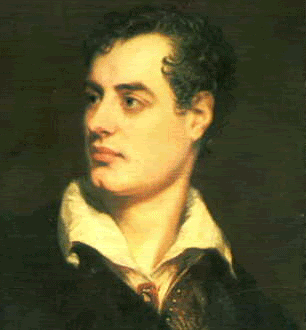
The poet, Lord George Gordon Byron, walked the line between romanticism and satire. A contemporary and friend (even lover) of Gothic writers such as Mary Shelley, Byron's works reveal a fascination with dark romance. His characters effectively showcase these darker elements. The Byronic hero has come to be an accepted literary term for such characters. Byron's heros were idealized versions of himself, sharing many of the same traits that made Byron the larger than life, controversial figure that he was. These traits can be found in Bryron's works, such as in Giaour, Manfred, and Don Juan.
Angst. The Byronic hero is a conflicted individual. The character may suffer from guilt or obsession. This affliction gnaws at the soul. The hero is contemplative, introspective, and most of all brooding.
Rebellion. The Byronic hero is a rebel, casting off social norms. He has no regard for class, station, or authority. He defies the laws and customs of society, often acting with total disregard. Some actions may even be dangerous or criminal.
Sexuality. The Byronic hero is highly sexed, possibly being involved with multiple lovers. This sexuality tends to be socially unacceptable, such as sleeping with a married woman. Byron has even addressed the taboo of incest, homosexuality, and bisexuality. However, much of this has been buried by his publishers.
Charisma. The hero is charming, witty, and seductive. Words to him are like colors to a painter. Speaking is an art, it is poetry. An aloof character, when the hero does speak, his words carry power and influence.
Isolation. The Byronic hero is in exile, often caused by his failure to coexist peaceably in society. Occasionally this exile may be self imposed, as the hero sees himself as a potential threat, or thinks he is above petty and pedestrian concerns.
Intellect. The Byronic hero is well-educated. He possesses both book smarts and street smarts. The hero is quick to perceive and to understand. This intelligence may be the source of much of the hero's angst.
Confidence. Despite the turmoil and moral ambiguity the Byronic hero faces, he is confident, even smug, in his dealings. Whatever challenge he faces, he does so standing upright and stiff-lipped.
This list of traits is more indicative of an anti-hero. The elements of isolation, despair, and rebellion are not normally associated with heros. This shows the influence of play writers like Sophocles and Shakespeare. John Milton had a considerable influence over Byron's style of poetry, most obviously in the treatment, whether intentional or not, of Satan as a sympathetic character. Drama, particularly of a dark and romantic sort, colors the poems of Lord Byron.
This list of traits is also very close to the list of symptoms of an antisocial personality disorder. Cunning, confidence, isolation, sexuality, criminality, and charisma are all key indicators. However, what separates the Byronic hero from the run of the mill psychopath is the moral affliction. The Byronic hero feels a sense of remorse, sometimes quite deeply. This suggests a conscience, and an injured one at that.
Is is interesting to note that this conflict of conscience appears more often in Byron's heros than in the poet himself. Byron rebelled against social custom and status despite enjoying the benefits to being a wealthy lord. Byron had numerous affairs, yet dismissed his lovers once her grew bored of them. In short, he showed many traits of a sociopath. He was not a man to admit guilt or responsibility.
The model of the Byronic hero has been used throughout literary history since its inception. Byron's works have inspired authors like James Joyce to philosophers such as Friedrich Nietzsche. His heros helped to inspire our modern interpretation of the vampire. Byron's personal physician, Polidori, wrote a novel, The Vampire, based largely upon Lord Byron's life. Even the Batman possesses many traits of a Byronic hero, including heightened sexuality. In sum, the influence of Byron's dark and romantic characters cannot be dismissed. Indeed, these same traits are embraced by many in the gothic subculture of today.


No comments:
Post a Comment